
In Spirit and Truth: Worship as God Requires (Understanding and Applying the Regulative Principle of Worship) by James R. Hughes
Tag: Exclusive Psalmody
Consistency in Worship by Scott Maciver
Scott Maciver has written a fine article over on the Our Confession website on the consistency of our holding to exclusive Psalmody:
“There are some today who have taken office in a church or are members of a church who would consider themselves to be exclusive psalmists and were we to ask them what their position on worship is; they would confidently assert that it would be that of exclusive psalmody. The test of the genuineness of our position comes when, like those referred to in Macrae’s Diary, we find ourselves in a worship setting out-with our own congregation or denomination where the worship is contrary to unaccompanied exclusive psalmody.
In such a situation, there are two options available to us. Do we continue to uphold the Biblical position we profess which forbids the worshiping of God in any other way not appointed in His Word (Westminster Shorter Catechism, Q51) or do we, when we are in a different setting, adopt a different position on worship all together? The temptation to some may be to partake in worship, no doubt offered in all sincerity, which is contrary to both that which we profess to believe and that which God has commanded in Scripture. Some may, for instance, sing the words of uninspired hymns to avoid giving offence to those sat in the pew next to them or to avoid disrupting the fellowship. Others may find themselves singing as they would consider it better to sing the words than to be silent and to not worship at all. Yet again, others may sing them as they consider the words to be theologically correct. On the other hand do we simply keep silent, not through any sense of superiority to those around us but by a consistent God honouring application of His commandments regarding worship?”
In answer to these questions, Maciver gives the following summary as an answer:
“Now that we have considered these two options open to us, we are left with a number of questions. Is our concern about obeying man before God when Scripture tells us that we ought to obey God rather than men (Acts 5:29)? Are God’s commandments only to be obeyed under certain circumstances and only in particular locations? Is our position on exclusive psalmody simply a preference or is it a conviction that we by God’s grace seek to consistently apply at all times? Finally, can it ever be defensible for an office-bearer who has vowed to exclusive psalmody to preside over public worship where uninspired hymns are being sung?”
These are great questions, I would be very interested in getting your feedback on these issues. For those who contribute to the forum at Our Confession, keep us updated on the discussion.
Online Course on Worship at Reformed Presbyterian Theological Seminary (RPTS)

PT13 – Ministry of Worship
Dennis J. Prutow, D.Min., Professor of Homiletics and Pastoral Theology
(For Dr. Prutow’s full bio please click HERE)
Ministry of Worship (PT13) is a study of the Biblical principles and practices of worship; and a consideration of public worship services, including the administration of the sacraments and weddings and funerals.
Class Number |
Audio File |
Lecture Notes |
Quizzes |
| Class 1 | Part 1 – Pages 1-4Part 2 – Pages 5-13 | Course Syllabus & | ___ |
| Class 2 | Part 1 – Pages 16-17Part 2 – Pages 17-19 | Handout 2 | Quiz 1 |
| Class 3 | Part 1 – Pages 20-21 Part 2 – Pages 21-26 | Handout 3 | Quiz 2 |
| Class 4 | Part 1 – Pages 28-30 Part 2 – Pages 30-32 | Handout 4 | Quiz 3 |
| Class 5 | Part 1 – Pages 33-34 Part 2 – Pages 35-36 | Handout 5 | Quiz 4 |
| Class 6 | Part 1 – Pages 37-38Part 2 – Pages 38-39 | Handout 6 | Quiz 5 |
| Class 7 | Part 1- Pages 40-44 Part 2 – Pages 45-48 | Handout 7 Handout 8 | Quiz 6 |
| Class 8 | Part 1 – Pages 48-49 Part 2 – Pages 49-50 | Continue withHandout 8 | Quiz 7 |
| Class 9 | Part 1 – Pages 50-56 Part 2 – Pages 57-58 | Finish Handout 8 &Handout 9 | Quiz 8 |
| Class 10 | Part 1 – Pages 58 Part 2 – Pages 60 | Handout 10 | Quiz 9 |
| Please Print and complete the final exam and then turn it in. | Final Exam |
Additional Reading Assignments:
| John Calvin, Author’s Preface, Commentary upon the Book of Psalms | |
| The Letter of St. Athenasius to Marcelinus Concerning the Psalms | |
| “The Worship of the Church, A Reformed Theology of Worship,” Committee on the Study of the Doctrine of Worship. | |
| “Psalms in the Worship of the Church,” Committee on the Study of the Doctrine of Worship, June 2004. | |
| Dennis Prutow, “Adrenaline and Worship” | |
| “The Minority Report on Song in the Public Worship of God” submitted to the Fourteenth General Assembly of the Orthodox Presbyterian Church in 1947 | |
| Makujina, Measuring the Music: Another Look at the Contemporary Christian Music Debate. |
A new website for confessional Scots: Our Confession
Please find below a link to a new website called Our Confession. The website is an online meeting place for Confessional Scots reformed in doctrine, worship and practice. The purpose of the website is to facilitate discussion with a view to fostering visible unity for those who are separated by denomination.
The website includes relevant articles which will be published on a weekly basis along with a discussion forum. It also includes Church papers written on the issue of Scottish Presbyterian Reunion. Our Confession can be found at www.ourconfession.org.
From the website:
“Welcome to Our Confession, an online meeting place for Scots who hold to the whole doctrine of the Westminster Confession of Faith.
Our Confession is intended to be a place of encouragement and edification for those who hold to the Westminster Confession in its entirety as their subordinate standard and seek to be reformed in doctrine, worship and discipline. Here like-minded believers can discuss issues of interest in a brotherly and constructive atmosphere.
Specifically, Our Confession has been established as an opportunity for those who are separated by denominational boundaries to discuss the issue of fostering visible unity in confessional Scottish presbyterianism.
Anyone who values the cause of Christ will surely mourn over the splintered state of the Church in Scotland and desire true visible unity. We want to discuss in a spirit of fellowship and mutual respect what differences and barriers there may be between denominations and how they could be overcome.”
New Articles: The Martial Ethos of Historic Reformed Worship series by Rev. John Sawtelle
New articles added to the Articles Online page:
The Martial Ethos of Historic Reformed Worship: Psalm-singing for vigorous Kingdom service (part 1) by John Sawtelle
The Martial Ethos of Historic Reformed Worship: Psalm-singing for vigorous Kingdom service (part 2) by John Sawtelle
The Martial Ethos of Historic Reformed Worship: Psalm-singing for Vigorous Kingdom Service (part 3) by John Sawtelle
The Martial Ethos of Historic Reformed Worship: Psalm singing and persecution in France by John Sawtelle
The Martial Ethos of Historic Reformed Worship: Psalm singing and persecution in the Netherlands by John Sawtelle
The Martial Ethos of Historic Reformed Worship: Psalm singing, persecution, and public resistance in the 16th century British Isles by John Sawtelle
The Martial Ethos of Historic Reformed Worship: Psalm singing and civil defense in early 17th century Geneva by John Sawtelle
Thanks to Rev. John Sawtelle for putting these posts together. Rev. Sawtelle is the Pastor of the All Saints Reformed Presbyterian Church (RPCNA) in Brea, CA
New Articles: The Rise and Decline of Exclusive Canonical Psalmody…
Ran across these articles today from Rev. John Sawtelle at the Calvin on Tap blog…
The Rise and Decline of Exclusive Canonical Psalmody in the Reformed and Presbyterian Churches: A Brief Introduction, Part 1 by John Sawtelle
The Rise and Decline of Exclusive Canonical Psalmody in the Reformed and Presbyterian Churches: The German Reformed Church, Part 4 by John Sawtelle
John Sawtelle is the Pastor of the All Saints Reformed Presbyterian Church (RPCNA) in Brea, CA
Latest UPDATE from Project Psalms…
Just got an update from the producers of Project Psalms:
“by the grace of God Project Psalms has now finished recording all 150 Psalms from the Scottish Psalter of 1650, including both versions of 13 of the Psalms.
We are now left with the task of Editing/Mixing, Mastering, CD Package Production, and Postage. We estimate that we will only need another $8,645.00 to complete the project. We are looking for larger donors now (in the range of $500-$1,000.00, or the whole lot!). Of course people who want to donate less than $500.00 are welcome to, however they will not receive the physical CD compilation and booklets.
Once the costs are covered, the MP3’s will be available for free download online for all to use without restrictions on non-profit reproduction and distribution.”
To learn more about Project Psalms, go to their website Project Psalms.
Previous Posts regarding Project Psalms:
Project Psalms 8/17/2011
UPDATE: From the Producers of Project Psalms 11/17/2011
UPDATE: on Project Psalms 2/14/2012
“The Book of Psalms is emphatically the ‘Word of Christ.’ The divine songs contained in the Psalter, are not only the Word of God, in the sense in which all Scripture is his word; but they may, with great propriety, be styled the ‘Word of Christ,’ inasmuch as they are constructed on the principle that Christ is, in many of them, the speaker.”
HYMNS IN THE PSALMS.
BY REV. JOHN BROWN, A. M.
In two of the apostolic epistles, Paul enjoins it on Christians, as a religious duty, to sing hymns in the worship of God. “Be filled with the Spirit, speaking to yourselves in psalms and hymns and spiritual songs, singing and making melody in your heart to the Lord.” “Let the word of Christ dwell in you richly in all wisdom; teaching and admonishing one another in psalms and hymns and spiritual songs, singing with grace in your hearts to the Lord” (Eph. 5: 19; Col. 8: 16). It is supposed that this apostolic injunction not only renders the use of human compositions allowable, but even imperative, inasmuch as we are commanded to sing both psalms and hymns. Now, I observe:
I. That those who make this distinction are not quite consistent with themselves. For the Apostle distinguish between “psalms, and hymns and songs,” whereas they distinguished only between psalms and hymns, making no account of the songs.* Even on their own principle, therefore, their worship is incomplete. In obedience to what they suppose to be the apostolic precept, they sing “psalms and hymns;” but, I am not aware that they sing anything which they themselves call “songs,” as distinct from “psalms and hymns.” On the same principle, then that they urge on me the use of hymns, as distinct from psalms, I urge on them the use of songs, as distinct from both. But,
II. It is evident that the hymns to which the Apostle refers were not modern productions. For they must have been in existence at the time when the epistles were written, as he does not direct the churches to make hymns, but to sing hymns. Consequently, he neither enjoins nor recommends the use of the hymns of Watts, or Doddridge, or Newton, or Toplady, or Hart, or Wesley, &c, however excellent these hymns may be; and we readily admit that many of them are beautiful pieces of sacred poetry. But Paul does not enjoin the use of these, for this plain reason, that they had no existence at the time, nor were their authors born until seventeen centuries afterward. The same observation applies to all modern productions, whether they be called psalms, hymns, or songs.
III. There is no evidence whatever that the apostolic churches were in the possession of any hymns, except those which have been transmitted to us in the Scriptures. Should any one be disposed to insist that the apostolic churches were in the use of hymns besides those contained in the Scriptures, the burden of proof lies upon him. Let him give us the hymn book that was used by the Colossians and Ephesians, and furnish us with satisfactory evidence of its genuineness and authenticity, and we will at once feel the obligation to use it. [This distinction is more apparent in Scotland, where those who use what are called “hymns,” have the “Psalms” bound in one book, and the “Hymns” in another. To be consistent, they would require a third book—a Book of Songs.] But,
IV. The “psalms, and hymns and songs,” of which the Apostle speaks, are all comprehended in the “Word of Christ”—a phrase which is equivalent with the “Word of God.” “Let the Word of Christ dwell in you richly in all wisdom, teaching and admonishing one another in psalms and hymns and spiritual songs.” By this phrase the Apostle limits the hymnology of the primitive church to the Word of Christ, or the Word of God.
V. The Book of Psalms is emphatically the “Word of Christ.” The divine songs contained in the Psalter, are not only the Word of God, in the sense in which all Scripture is his word; but they may, with great propriety, be styled the “Word of Christ,” inasmuch as they are constructed on the principle that Christ is, in many of them, the speaker. The 22d Psalm, for example, is the “Word of Christ” in the same sense as the 17th of John is the “Word of Christ.” But modern hymns are not constructed on this principle, nor entitled to this appellation.
VI. Paul’s “songs” are described as being “spiritual,” or (pneumatikais) “inspired.” This is evidently the meaning of the original word in 1 Cor. 2:13, where the Apostle applies it, “not to the words which man’s wisdom teacheth, but which the Holy Ghost teacheth.” And as he describes the songs which he recommends as being “inspired,” it is but reasonable to suppose the “hymns” to be likewise inspired. “By hymns,” says Dr. Gill, “are intended not any mere human compositions; since I can hardly think the Apostle would place such between psalms and spiritual songs made by men inspired by the Holy Ghost, and put upon a level with them.”
VII. The term hymn has unhappily acquired a new acceptation in modern times. Other Scripture terms have been subjected to the same abuse. The word bishop, for example, is now generally applied to a dignitary of the Church of England, or of the Church of Rome, presiding over the clergy within a district called a diocese; and many are, no doubt, led to believe that it has the same meaning in the New Testament; whereas the term in Scripture is used synonymously with that of elder—the Scripture bishop being the overseer not of the clergy, but of the congregation. So the word hymn, being now generally applied to the poetical compositions of good, but uninspired men, in distinction from the Psalms of David, many are led to suppose that the Apostle uses the word in the same sense, and makes the same distinction. Before I knew the Greek language, I thought it wrong to sing a psalm after the Lord’s Supper, because we are told that the disciples sang a hymn, imagining that a hymn must be something distinct from a psalm, according to the modern notion. But this distinction is founded on the abuse of language.
VIII. “The psalms and hymns and inspired songs,” recommended by the Apostle, appear to me to be all contained in the Book of Psalms. It is well known that in the sacred languages the same book is denominated by two names, namely, psalms and hymns—hymns in the original Hebrew, and psalms in the Greek translation. When we sing psalms, therefore, we sing hymns, for such is the meaning of the word Tihillim, the Hebrew title of this sacred book.
IX. Besides the running title applied to the book, each of these inspired compositions, generally, bears a superscription of its own; and by the subordinate titles they are distinguished into psalms, hymns and songs. It is most probable, therefore, that the Apostle alludes to this distinction. But,
X. Should the authority of the titles be disputed, this will not alter the matter much, for the same distinction is to be found in the body of the psalms. Thus we read: “Let us come before his presence with thanksgiving, and make a joyful noise unto him with psalms” (Ps. 95:2). “And he hath put a new song into my mouth, a hymn to our God” (Ps. 40:3, Greek); “I will praise the name of God with a song” (Ps. 69:30). Now, as the Greek terms in the Septuagint, rendered psalms, hymns and songs, in these three texts quoted from the Psalter, are the very terms used by the Apostle, in Col. 3:16, and Eph. 5:19, I think it is plain that the psalms and hymns and songs, of which he speaks, are all to be found in the Book of Psalms, especially as we have no evidence of any other hymns being in existence at the time, except those contained in the Old Testament Scriptures, and as the Apostle does not direct us to make hymns, but only to sing them. As Dr. Gill quaintly remarks, “We are commanded to take a psalm, not to make a psalm.” (Ps. 81:2.)
P. S.—Candor requires me to state that the hymns adopted by the Baptist denomination are the hymns used by the congregation over which I preside.* I should greatly prefer the Scotch version of the Psalms, and that alone, believing it to be the purest metrical translation extant; but, of course, I cannot compel my brethren to see with my eyes. The hymn-book which we use, however, contains a considerable number of the Psalms of David, together with the hymns contained in other parts of Scripture, more or less purely translated. I endeavor to select the best of these for public worship, and think I can do so on the same principle that I would use a translation of the Bible which I did not consider the best, until the church were brought to sanction a translation more perfect. By making this statement, I shall, perhaps, expose myself to the criticism, or even censure, of my brethren; but I rather run all risks on that head, than conceal either my views or my practice.
John Brown, “Hymns in the Psalms”, Reformed Presbyterian and Covenanter, Vol VIII, 8-10.
The 1928 Edition of the Psalter
From the Covenanter Witness Magazine, July 25, 1928
Synod this year appointed a committee to arrange for the publishing of a new edition of the Psalter. This committee was asked to compile a more complete index of the psalms and to substitute tunes where the present music was judged unsuitable for congregational singing. The committee desires that the changes that are to be made in the music may represent as far as possible the will of the Church as a whole. In order to determine just what that will is the committee is asking all who are interested in “good congregational singing to go through the present Psalter and make a list of the tunes that are regarded as unsuitable. The committee would appreciate having these lists as soon as possible. After the committee has reviewed these lists and has decided upon the number of tunes to be changed, it will proceed to find other tunes for the tunes that are to be replaced. In this placing of tunes the committee desires the fullest possible cooperation of all the Church. In order that the coming edition of the Psalter be what we all want it to be, three matters must be kept in mind: (1) Regular and earnest prayer for wisdom and guidance that all may be done for the glory of God; (2) Regular work is necessary to produce anything worthwhile; (3) Promptness in getting all suggestions to the committee will greatly help in getting the book completed. For the present all suggestions should be sent to the chairman of the committee,
D.B. Martin, Morning Sun, Iowa
“Instruments are used for the express purpose of making the service attractive, and the praise offering is often rendered for the worshippers by those whose lips and hearts have never been touched by the love of God. When the worship is thus rendered by machinery, God is robbed of that heart service and spiritual communion which each worshipper should have with Him in the ordinances of grace.”
 “Another peculiarity of the Reformed Presbyterian Church is that no instruments of music are used in divine worship. They believe that instruments were used in the tabernacle and temple worship by the Levites, and at the time of the offering up of sacrifices by the priests. As these services were wholly typical and were done away with at the coming of Christ, so also all the accompaniments and material supports of that service. At the advent of Christ the building was completed. and the scaffolding was taken down. Christ and the Apostles never used an instrument of music in the synagogue worship, although they used the Psalms. If instruments had been necessary to acceptable worship, the example or direction of Christ in this matter would have been given. Christ requires a spiritual service—the melody of the heart with the fruit of the lips. The leading writers and fathers of the Church give instruments no place in the worship. They were introduced by Pope Vitalian, in A. D., 660, to “augment the eclat of religious ceremonies.” Being of Romish origin, all true Protestants should look upon the innovation with suspicion.
The true principle of Christian worship is “What has the Lord required,” and not what He has not forbidden. All Presbyterians recognize the Westminister standards, and the Confession of Faith says we are to “sing Psalms with grace in the heart,” and “the acceptable way of worshipping the true God is instituted by Himself, and is so limited by His own revealed will that He may not be worshipped according to the imaginations and devices of men.” It is an admitted fact that instruments and operatic choirs destroy congregational singing, and substitute a meaningless service for that which every heart should render unto God. Instruments are used for the express purpose of making the service attractive, and the praise offering is often rendered for the worshippers by those whose lips and hearts have never been touched by the love of God. When the worship is thus rendered by machinery, God is robbed of that heart service and spiritual communion which each worshipper should have with Him in the ordinances of grace.”
From The History of the Reformed Presbyterian Church of North America by William Melancthon Glasgow, p59.
“The New Covenant is like a marriage bond between God and His people. Their meeting each week properly brings joy and delight. So the saints sing Psalms to God.”
 From the RPCNA Directory for the Worship of God:
“7. The New Covenant is like a marriage bond between God and His people. Their meeting each week properly brings joy and delight. So the saints sing Psalms to God.
8. The heartfelt singing of praise is an element of public worship. The Psalms of the Bible, because of positive biblical warrant, their inherent excellence, and their divine inspiration, are to be sung in the public worship of God, to the exclusion of all songs or hymns of human composition. They are to be sung without the accompaniment of instruments, since these are not authorized for New Testament worship. For the sake of unity, the Psalm versions used in the praise of God should ordinarily be those approved by the Synod of the Reformed Presbyterian Church of North America. Psalms, or portions of Psalms, should be chosen for the appropriateness of their content within a particular service of worship. If only a portion of a Psalm is sung, careful attention must be given to the larger context. Congregations should not fall into the habit of using only certain favorite Psalms, and sessions should consider a plan of singing systematically through the Book of Psalms.
9. The people of God are to sing thoughtfully, reverently, and enthusiastically, with grace in the heart. Careful attention should be paid to the music and to the leading of the precentor, that the praise might resound with a beauty reflective of the glory of God and His holiness. Those chosen to be precentors should have the marks of Christian maturity and the gifts to perform this function. They should lead the singing in a simple, orderly, and dignified manner. They should not interject interpretations or comments on the content of the Psalms sung. One of the fruits of the Reformation was the restoration of the biblical practice of congregational singing. A choir may be formed to help lead the praise, but singing must not be left to the choir. Congregational singing ought always to be the norm.
10. The Psalms have a depth of meaning and beauty that will repay the most careful study. It is vitally important that the congregation understand what is sung. Therefore, it is helpful for the elders to make brief comments on the Psalms sung. It is particularly helpful if one of the Psalms is selected for a more substantial, succinct explanation by an elder before it is sung. Attention should be given to how the Psalm reveals the work of Christ and the blessings of the New Covenant.
The RPCNA Directory for the Worship of God, F-4
The Tucson Reformed Presbyterian Fellowship is meeting in a new location
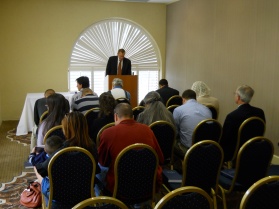 The new location for the Tucson Reformed Presbyterian Fellowship (RPCNA) is:
The Doubletree Hotel Tucson-Reid Park
445 S. Alvernon Way,
Tucson, AZ 85711-4198
From their website:
“Our morning worship begins at 9:50 AM & Evening Worship at 4:30PM
Today, our worship seems unique, even strange to some. We sing only the 150 Psalms without the use of instruments. Strange as it may seem, for thousands of years, this was the norm in the church. (see Dr. W. Robert Godfrey, Ancient Praise for a brief history of Psalm singing)
We hold to what is called the ‘Regulative Principle of Worship’, which states that God is only to be worshiped as He has revealed in His Word (Deut. 12:32). What God commands is to be employed in worship; if God does not command something, then it is forbidden.
This means that a simplicity of worship will be obvious as Word-centered worship is offered to God. The Tucson Reformed Presbyterian Fellowship will have the following elements in her public worship:
- Reading of the Scriptures of the Old and New Testament.
- The Preaching of the Word of God in an expository manner.
- The Prayers of the saints and on behalf of the saints.
- The collecting of gifts and tithes to sustain the advancement of Christ’s Kingdom.
- The singing of Psalms without instrumentation.
- The New Testament Sacraments of Baptism and the Lord’s Supper.
The Tucson Reformed Presbyterian Fellowship (RPCNA) is committed to the full inspiration and authority of the Bible in all matters of faith and life. We believe that the truth of Scripture is knowable and necessary for salvation. Faith comes from hearing, and hearing through the Word of Christ (Rom. 10:17). Since Christ commissioned the church to make disciples of all nations (Matt. 28:19), we believe it is part of our duty to, set forth the truth of Scripture clearly and publicly by way of preaching and teaching, and creeds and confessions, so that they may be to taught to observe all that Christ has commanded (Matt. 28:20).
In light of the above, we believe that the most comprehensive and accurate summary of what the Bible teaches is to be found in the Westminster Confession of Faith, together with the Westminster Larger and Shorter Catechisms. The Westminster Confession was completed in England in 1647 as a comprehensive statement of Christian belief and practice, with the desired intention of helping Christ’s church become unified in doctrine, government, and worship (John 17:11). In addition to the Westminster Standards, we also maintain the Testimony of the Reformed Presbyterian Church of North America, which is our continuing and contemporary application of the Word of God to our current culture and context.
Each of these documents is considered to be subordinate to, and correctable by, the Word of God. We hope that you will take some time to read our Confessional Standards and contact us if you have any questions or concerns.
For a theology of New Testament worship, please see “The Worship of the Church.”
The Tucson Reformed Presbyterian Fellowship (RPCNA) is a new work planted by the First Reformed Presbyterian Church of Phoenix AZ.
The “Reformed” in our name refers to our adherence to the biblical principles reasserted in the Protestant Reformation of the 16th and 17th centuries. The Reformers reasserted that salvation is by grace alone, through faith alone, in Christ alone, for the glory of God alone. We stand with our forefathers in affirming the doctrine of “Sola Scriptura” – the conviction that the Scriptures are God-breathed and sufficient for all matters of life and godliness (2 Tim. 3:16). Our spiritual heritage particularly comes from the Reformation in Scotland and the Scottish Covenanters. “Presbyterian” refers to our form of church government. Each congregation is under the oversight of a plurality of elders, who are also part of broader courts known as Presbyteries and Synod.
Our heartfelt desire is to worship God according to His will, in spirit and in truth (John 4:24). We desire to glorify Him in our lives as individual Christians and as a body of believers united to Jesus Christ our Lord. If you live in the Tucson area, or are planning to move or visit here, we invite you to come and worship with us!”
Reformed Presbyterian International Conference
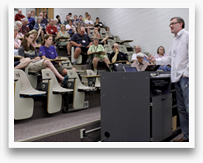
THE RP INTERNATIONAL CONFERENCE is a six day “family reunion” held every four years. The Conference brings a segment of the Family of God together which includes new families who have united with the RPNCA, friends of the RPCNA, and families with a rich history of God’s covenant faithfulness over the generations. Family members come from places as far away as Africa, Australia, Cyprus, Ireland, Japan, Scotland, and maybe from places such as East Asia and the Middle East. Over 1600 saints, young and old, enjoy fellowship focused on the Word of God expounded, the Psalms sung, and prayer.
Beyond such worship experiences there is plenty of diversity when it comes to workshops, seminars, and classes for all ages. It is a golden opportunity for the young people of the church to learn how the Lord is moving among peers throughout the world. From the talent night, to the consecration service, to the social events, to the free time, becoming acquainted with the members of Christ’s Family helps such passages as 1 Corinthians 12 come to life.
July 11, 2012 | Lord’s Day lunch registration will close at 5:00 PM EDT on Saturday, July 14.
July 7, 2012 | Room assignments have been emailed to all registrants. Please email the registrars if you didn’t receive this information (registrar@rpinternationalconference.org).
July 4, 2012 | The Program and Recreation booklets are now available on this site. Paper copies of these will be included in each household’s conference packet, but you’re welcome to read them in advance.
July 3, 2012 | Newsletter #6 is now available. Find all the latest news for the conference in the newsletter, which is available for download as a letter-sized version (PDF). This latest and the previous five newsletters can all be downloaded from the newsletter page of this site.
June 23, 2012 | The R.P. International Conference Staff wants people to know that, during the conference, visitors are welcome to attend the morning sessions in the Chapel and the adult breakout sessions during the second hour of each morning. The Tuesday and Thursday evening worship services are open to all. Visitors will not receive nametags and no meals will be available on campus.
As a reminder, visitors are welcome on the Lord’s Day for the following:
- 9:00-10:15 AM: Morning worship Service
- Dr. Richard Holdeman, preaching
- 10:30-11:45 AM: Sabbath School Class (Adult/College/High school)
- Dr. Joel Beeke, Teaching
- 11:30-1:30 PM Lunch
- Registration required at www.rpinternationalconference.org.
- 2:00 PM: Psalm Sing
- 7:15-8:30PM: Evening Worship Service
- Pastor David Reese, Preaching
MAY 21, 2012 | Join us for lunch! Those not attending the conference are invited to join us for the Lord’s Day, July 22, 2012, as discussed in newsletter #4. All are welcome to come for the worship services, classes, and Psalm Sing. There are no fees for attendance on that day. However, advance lunch reservations are required for those wishing to join us for lunch who are not registered for the conference. Please register online using this form.
Make a Joyful Noise: the Metrical Psalms, a Musical Traditions program by the BBC
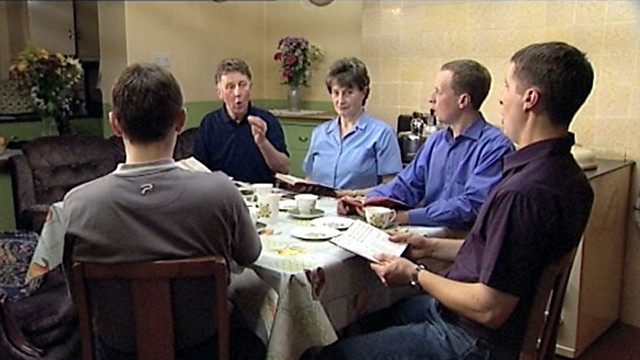 This program looks very interesting, covering the history, translation and use of the Metrical Psalter. I have had several people recommend it to me but I can’t get the videos to play on my computer. (I have
  updated my browser and player, but still not working.)
First, what are your opinions of the portrayal of the Metrical Psalter by the BBC? Does anyone know if these videos are available  anywhere else on the internet?
Volume 8 of “Worthy to Be Praised” is now available
 Volume 8 of the Worthy to be Praised series is now available:
Of the twelve tunes featured, many are old favourites such as Stracathro, Crimond and Martyrs while some, like Shere and St James, may be an inspiration to learn new tunes for praise.
Volume 1 is back in stock now too, and there are new sample singings on the home page as well as discounts for CD bundles.
“It is our prayer that listening to the CDs will not only improve our family and congregational singing, but also prove a blessing as we hear the precious words of the psalms sung clearly and with expression”
From the Website for Worthy to Be Praised:
“Sing the Psalms with Worthy to be Praised
In this site we wish to share with you our enthusiasm for Psalm Singing and to tell you about the Worthy to be Praised series of Psalmody CDs. While many Psalmody CDs exist, these are unique, having one disc of beautiful Psalm Singing and one disc to teach the harmonies for these tunes.
The discs, which have a distinctively Scottish flavour, are attractively produced and make ideal gifts. With appeal to all ages, they have been used successfully in home education and in Church Psalmody Classes for both children and adults.
The words are all from the 1650 Scottish Metrical Version of the Psalms, which can be obtained by clicking on this link. From Volume 4 onwards, Disc 1 also contains four extra tracks with Scottish Gaelic Psalm Singing and one extra track of children’s voices.
The Worthy to be Praised CDs are produced by the Psalmody Committee of the Free Church of Scotland (Continuing). All proceeds from sales on this website will be transferred to the church to cover the costs of production and finance future recordings.
The CDs are also now available at Blythswood Bookshops (Portree and Dingwall), Stornoway Religious Bookshop, FP Bookroom (Glasgow) and CLC Bookshop (Inverness).”
New Presbyterian Reformed Church plant in Jasper, Indiana

We are a new fellowship of families growing in Reformed doctrines, worshiping according to Scripture, and looking forward to the Lord’s blessing upon us.
The Presbyterian Reformed Church is an indigenous North American group of churches continuing historic Scottish Presbyterian orthodoxy in doctrine, worship, government and discipline, on the basis of a conviction that these principles and practices are founded upon and agreeable to the Word of God.
We confess the Scriptures of the Old and New Testaments to be the Word of God written, the only infallible rule of faith and life.
We declare the Westminster Confession of Faith and Catechisms to be founded upon and agreeable to the Word of God in setting forth the system of truth taught in Holy Scripture.
We affirm our adherence to and determination to continue the simplicity and purity of worship hitherto practiced in these congregations.
We accept the Westminster Directory for the Public Worship of God as a scriptural and suitable guide for the conduct of public worship.
We adopt the Presbyterian form of church government as the form of government instituted by Christ for the government of His church to the end of the age.
Presbyterian Reformed Church
303 Main Street
Jasper, IN 47546
Bradford C. Freeman, Minister
“There is no light in Old or New Testament to warrant any other; either you must fancy a Psalm, and say Christ meant this way, when he spake of the Book of the Psalms, and devise a new way of worship out of your own brains, or else sing the Psalms which Christ and His Apostles call Psalms.”

“Let us consider the vanity of the contrary opinion [distinguishing between Psalms, hymns and spiritual songs], in regard it utterly makes way for will worship, which they seem to be so much against. For first, I am commanded to sing Psalms, Hymns, Songs; The Old and New Testaments speak of no other Psalms than of David and Asaph and of such like inspired persons; and they are called by Christ and his Apostles, but you must not sing them (say they). I ask what Psalms then must you sing? There is no light in Old or new Testament to warrant any other; either you must fancy a Psalm, and say Christ meant this way, when he spake of the Book of the Psalms, and devise a new way of worship out of your own brains, or else sing the Psalms which Christ and His Apostles call Psalms. Besides, how can any man persuade himself, or others, when he sings, that he sings a Psalm, when he doth not sing that which Scripture has only called a Psalm? Or how can any man distinguish, now I sing a Psalm, now a Hymn, now a Song, where there is not one word in the New Testament to distinguish them from one another, or the two latter from the Book of Psalms? If any man from the New Testament can distinguish a Psalm from a Hymn, or a Hymn from an Ode or a Song, or any one from another, but as they borrow it from the Old Testament, he shall be an Oracle.”
by Cuthbert Sidenham, from A Christian, sober and plain exercitation on the two grand practical controversies of these times : infant baptism and singing of psalms (1654), page 188-189 found here
Pilgrim Covenant Church of Singapore
The following article on Pilgrim Covenant Church of Singapore appeared recently in The Straits Times newspaper:
 “The church sings psalms from a 1650 Scottish hymn book in a room without adornment. There are no instruments.
Pastor J. J. Lim, 46, exhorts the congregation of 150 at Pilgrim Covenant Church, perched on stackable plastic chairs, to obey God rather than bend to modern society’s norms and noise.
In 1999, the former software engineer founded the church, which desires to live right by being rooted in Biblical truths. ‘We are taught how to worship in the fear of God rather than merely for carnal enjoyment,’ he says.
‘We are taught how to respect and obey our civil authorities. We are taught to do good works and how to deal with disappointments in life. We are taught how husbands and wives ought to relate to one another.’
Such an emphasis on upright living flows from searching the Bible and the Reformed statements of beliefs, mainly the Westminster Confession of Faith. This is regarded as an accurate summary of the Bible covering all aspects of church, society and family life. ‘It teaches us who God is, and what duty God requires of man. It points us to the Holy and Sovereign God, and to Jesus Christ our Saviour,’ Pastor Lim explains.
Reformed churches are a spectrum of Protestant denominations established in 16th-century Europe. They were part of the Reformation, a radical time when reformers like Martin Luther and John Calvin opposed the doctrines and corruption of the Roman Catholic Church.
Theologian Simon Chan of the Trinity Theological College notes: ‘Reformed churches are a mixed bag ranging from purists like the Bible Presbyterians to the majority of Presbyterians in Singapore who are quite indistinguishable from other ‘mainstream’ Christians.’
Some Reformed churches want to return to the ideal of John Calvin’s 16th-century Geneva, where he was influential as a church reformer. ‘It presupposes that that period was the unsurpassed high point of the Reformation.’
Core Reformed beliefs include the sovereignty of God, and that salvation depends on God’s grace and not man’s merit or effort.
At Pilgrim Covenant Church, roots and anchors are important. Says its deacon, Dr. Fong Chee Wai, a biomedical scientist in his early 40s: ‘We live in a world that is changing constantly – our physical, social, economic and cultural environment evolves so fast due to Singapore’s openness to the world.
‘However, it is important that we hold firmly to our Christian values and principles, and not let our secular life dictate our worship and view of God.’
Sometimes, the pervasive sense of roots slips into speech. Pastor Lim prays in Elizabethan English with words like ‘thee’ and ‘thy’. When asked, he smiles good-naturedly and says he grew up in a Bible Presbyterian church that used the King James Bible translated in 1611. ‘We naturally speak in King James English when we address the Lord. But that is not essential. Prayer is an outpouring of the heart. I relate to God as sovereign, before whom I show deep reverence.’
Members of the more back-to-roots Reformed coterie know what to say when fellow Christians think their churches are strict or boring. Student Sarah Lim, 15, who attends Covenant Evangelical Reformed Church, says the Reformed life is ‘invigorating and passionate’ – whether she is studying the life of unrelenting reformers or bonding with friendly church mates of all ages over sports, picnics, and Bible study.
Certainly, Mr. Jeff Low, 26, from Pilgrim Covenant, leads a life steeped in beauty. The administrator of a contemporary Western art gallery is trained in classical guitar. His repertoire runs from classical to Spanish flemenco, and he has danced the tango for years.
While music is his passion, he can appreciate singing without instruments from the 1650 Psalter or hymn book. Unlike modern versions, it contains only biblical psalms arranged for singing.
Dr. Fong Choon Sam, dean of academic studies at the Baptist Theological Seminary, discerns both roots and constant reform within the movement. ‘In their time, reformation ideals were radical and almost anti-institution,’ he says.
But there is a Reformational saying that ‘the church is always in reform’. So the younger generation is taking this up, and saying the modern church needs reform all over again. ‘So yes, there is a need to return to some old things.’
Meanwhile, Pastor Lim prays that more Singaporeans, always busy, with no time to reflect, and seeking instant gratification even in church, will ‘return to the old paths’.
He says: ‘Unless we return to God for stability, we are essentially left with shifting sand.’
by Lee Siew Hua

ORIGINS: The first Reformed churches were established in Switzerland, and they spread in Europe during the 16th century. They were one branch of the Protestant Reformation, ignited when reformers like Martin Luther and John Calvin opposed the doctrines, practices and corruption of the Roman Catholic Church of the day. New Protestant churches were birthed in this religious upheaval.
TRADITIONS: Reformed theology is expressed in statements of belief such as the Westminster Confession of Faith, deemed an accurate summary of doctrines and covering all aspects of church, society and family. The more austere churches limit their music to Biblical Psalms and exclude instruments.
BELIEFS: The movement emphasises God’s sovereignty, and that it is God’s grace that powerfully saves and regenerates sinners – salvation is not based on man’s merit.
IN SINGAPORE: Reformed churches are a spectrum of denominations ranging from purists like the Pilgrim Covenant Church and Bible Presbyterians to the majority of Presbyterians, now quite indistinguishable from other mainstream Christians.”
“How Almighty God is to be worshipped is no trifle to be decided according to human pleasure and preference.”
 “2. The Covenanter Church believes that it is sinful to sing uninspired hymns in the worship of God. The Presbyterian, Methodist and many other denominations do not so believe. We are convinced that we can give a valid Scriptural proof for our position on this matter. To us it is not a matter of indifference, but a very important matter indeed. How Almighty God is to be worshipped is no trifle to be decided according to human pleasure and preference. But the advocate of open communion asks, in effect, that the position of the Presbyterian and Methodist Churches be made the rule that shall govern the practice of the Covenanter Church concerning admission to the Lord’s Supper.”
J.G. Vos discussing admittance to the Lord’s table.
The whole work can be found here
“We need as a church to explain to our members from time to time, as well as to exhibit to the churches around us, why we adhere to the exclusive use of the Psalms in the worship of God. We need to do this because of the natural inclination of man to substitute the human for the divine, and to consult his own feelings, even in matters of worship, rather than the revealed will of God. The question in all such matters is not what is most pleasing to human sense, but what does God require.”
From the Old Light Covenanter and the American Covenanter websites, a Report on the Synod’s Committee on Psalmody (RPCNA):
 “The question of the matter of praise is not now, and never has been, an open one in the Reformed Presbyterian Church, yet it is one upon which many church members need line upon line and precept upon precept. We are surrounded by those who are hostile to the exclusive use of the Book of Psalms as the praise book of the church; many temptations are thrown in the way of some members of our church to use hymns of human composition in divine service, and some say we are very narrow-minded and bigoted because we confine ourselves to the hundred and fifty Psalms of the Bible. We need as a church to explain to our members from time to time, as well as to exhibit to the churches around us, why we adhere to the exclusive use of the Psalms in the worship of God. We need to do this because of the natural inclination of man to substitute the human for the divine, and to consult his own feelings, even in matters of worship, rather than the revealed will of God. The question in all such matters is not what is most pleasing to human sense, but what does God require. Were we at liberty to consult our own inclinations no doubt many would substitute some other book in place of the Bible, to be read in family worship and in the house of God. Who among evangelical Christians will affirm that we ought to displace the Bible by any other book, because, forsooth, it would be more pleasing and attractive to the perverted taste of man? It is not denied that many hymns of human composition are beautiful in thought and expression, and instructive as well, yet that does not warrant us in using them in divine worship. The horse is a beautiful animal, and useful, too, more beautiful in many eyes than the ox; there are many who have a fancy for dogs and will not hesitate to say that they are more beautiful than goats, yet under the law the horse and the dog were unclean and to offer them in sacrifice would have exposed the offerer to the just displeasure of God, while bullocks and goats were appointed and acceptable offerings. We should beware of offering to God that which he has not prescribed, lest we provoke him to anger, and bring down upon us his righteous judgments.
No one will deny that there is warrant for the use of the inspired book of Psalms. It will not be denied that God gave these Psalms to the Jews as their book of praise. All scholars admit that the “hymn” which Jesus sang just after the institution of the sacrament of the supper was selected from this book; and it is capable of demonstration that when Paul, by the Spirit, enjoined on the Ephesian and Colossian Churches the singing of “psalms and hymns and spiritual songs,” he meant no other than the inspired songs of the Bible. We are frequently commanded to praise God, but never to make a hymn to be sung in his praise. To use hymns of human composition in religious worship without divine warrant is daring presumption; it is to say that “God’s Spirit acted niggardly in doling out an insufficient supply of praise songs;” and it is to profess that we are wiser than God. Let us beware of charging God foolishly.
Since we cannot consistently and conscientiously sing anything except the Psalms of the Bible in divine worship we ought not to seem to countenance the use of other songs in such service. It is damaging to the conscientious convictions of our members to frequent even houses of worship where such corruptions of worship prevail. To do so is to enter on a course which is almost certain to end in defection.
While contending for the exclusive use of the inspired psalter, it is the bounden duty of the church to provide for use in all her services a version of this book of praise as free as possible from blemishes, so as not unnecessarily to give occasion to others to scoff and deride. It is quite generally admitted among ourselves that the Scottish version of the book of Psalms with all its excellencies is far from perfect. The demand is growing louder and louder year by year for something more smooth and agreeable not only to poetic taste but to the original. Shall this demand be heard? If so, what shall be done? Shall we return to the ancient mode of praise and chant the Psalms or shall we have an amended version? Synod has already given its endorsement to the use of chants, yet few are ready to introduce them into the public worship of God. A revised version of the psalter seems to be necessary. The committee appointed by Synod one year ago to prepare such a version, is ready to report. Since the work of that committee will come before Synod for direct action, we refrain from expressing our judgment at this time. One thing we do desire to urge on Synod, to wit: The importance of seeking agreement and harmony on the part of all psalm-singing bodies in the use of the best version of the psalter, the combined scholarship and poetic talent of the churches can produce. When all the psalm-singing churches present a united and harmonious front in this matter, we can with better grace invite the other churches to unite with us in the use of the inspired Book of Psalms.
There are yet other matters of importance in the praise service of the church. The first that we will mention is that we sing with the spirit and with the understanding, also. The mere use of the Scripture Psalms in the service of praise is only solemn mockery unless the heart also be employed. That the heart may be employed we need to understand the sentiment of the psalms. The custom of expounding a portion of sacred song on the morning of each Lord’s day is well adapted to promote a better understanding of the psalms, and ought to be perpetuated. Along with this all should earnestly seek the enlightening influence of the Holy Spirit.
It is also of great importance that we sing skillfully. To this end the voice must necessarily be cultivated to sing in time and in tune. Too little attention is paid to this in many of our congregations, hence our congregational singing is in some cases a laughing-stock to those around us. Singing classes should be organized in all our congregations, and practice in the service of song should be kept up.
Your committee would recommend the adoption of the following resolutions:
1. That we enjoin upon all members of the Church to refrain from the use of hymns of human composition as a service of worship on week-day or on Sabbath, as being a violation of that command which forbids the worship of God “in any way not appointed in his word.”
2. That steps be taken at this Synod to secure the co-operation of all the psalm-singing churches in America in preparing a version of the Book of Psalms in harmony with the original and with poetic taste, upon which all may unite.
3. That we urge upon all the members of the church to use means to improve the congregational singing of the church.
4. That we renew the recommendation of the Psalm-Singer, edited by the Rev. George Warrington, of Birmingham, Iowa, as an able and faithful exponent of the teachings of God’s law as to the service of praise, and urge upon the members of the Church to give the paper a liberal patronage for the sake of their families and for the advancement of the cause.
Respectfully submitted,
J. C. McFEETERS,
J. F. CARSON,
JOHN AIKIN,
WM. LYNN,
Committee.
Report of the Synod’s Committee on Psalmody, 1888 found here and here
 Exclusive Psalmody