From the producers of Project Psalms…

From the producers of Project Psalms:

Project Psalms

This project was started in August 2011 and is thought to be one of the most effective ways to learn the Psalms and also to improve Psalm singing. It is an ideal tool for you and your family and even your congregation.

The project does however still require a lot more funding to proceed with the recordings and production costs. They provide a pre-order option in which you can “donate” by pre-ordering. The project only requires a total of 300 pre-orders and already has 26. Please visit http://www.projectpsalms.com/Pre-OrderDonate.html to pre-order or donate.

There are five key features of this project which make it different and more effective than any other Psalms project produced today or in the past; these include:

1. Solo voice (tenor) – This enables the recordings to act as an electronic lead (or Precentor) that people can easily learn from and sing along to. In their market research, when it comes to actually learning the Psalms to sing, having four-part harmonies or a choir setting is more distracting and makes it harder for the average person to learn the main melody line.

2. One tune per Psalm – This is quite unique in that it really helps with keeping the internal consistency of the words in the Psalms and also aids in remembering a Psalm by associating a single tune to it. In total there will be 184 tunes (150 + 21 (for the additional parts in Psalm 119) + 13 (for the Psalms with two versions in the Scottish Psalter)). Of course if people want to mix and match tunes later, they have the liberty to do that.

3. High-definition recordings – This further allows for clarity in the tone of the voice and will also enable people to hear and understand the words clearly even without a song book in front of them. Unfortunately many recordings of Psalms in song are of poor quality and in many cases not understandable, or they are in four part harmony or choir settings which makes it difficult to understand many words.

4. Comprehensive – These recordings will cover every verse of the Psalms, and will be including both versions of the 13 Psalms which have two versions in the Scottish Psalter of 1650. To date there is not a recording package of all the Psalms in song in English with internal consistency.

5. Devotional – Not only is this the most efficient tool for learning to sing the Psalms, it is also providing devotional and contextual notes which can heighten the intimacy people can have with the Psalms and therefore with Christ. This enables families and individuals to reflect on the Psalms with clarity and is a great aid to their devotional life.

The project is currently endorsed Dr. Francis Nigel Lee ((Professor-Emeritus Queensland (Presbyterian) Theological College (Seminary), Australia), Rev. David Silversides (Pastor, Loughbrickland RPCI, Ulster, UK) and Rev. J. Glenn Ferrell (Pastor, First OPC, San Francisco, CA, USA), and all donations will be under 3rd party review by Daniel Scot (Director of Ibrahim Ministries International (www.imi.org.au)).

You can listen to Psalm 23 on their website at http://www.projectpsalms.com/Psalm%2023%20v1-6.mp3

The final package from Project Psalms will include:

– A 15 Audio CD set with the first-ever comprehensive recordings of the metrical Psalms (including 2 versions for 13 of the Psalms) as found in the original Scottish Psalter of 1650 (sung unaccompanied by a professional tenor).

– A 4 MP3 CD set with the same recordings but in MP3 format.

– A hard-copy booklet containing the Scottish Psalter of 1650 text and also devotional and contextual notes by John Brown of Haddington.

– A hard-copy booklet containing the sheet music for the tunes used throughout the recordings.

– A soft-copy booklet (on the last MP3 CD) with sheet music and the Scottish Psalter of 1650 text in one PDF for easy reading of both the tune and the text together; ideal for iPad’s and the like.

This project will be a powerful resource for generations to come. Please prayerfully consider pre-ordering or donating. You can learn more about the project at www.projectpsalms.com.

Question #19: What does the singing of Psalms exclusively have to do with the closing of the canon? Is the writing of new songs the same as writing new Scripture?

Question #19: What does the singing of Psalms exclusively have to do with the closing of the canon? Is the writing of new songs the same as writing new Scripture?

Or we might even ask, “Is the canon really closed?”

There have been some recent questions on the EP website regarding the Canon of Scripture itself. I think this is related to the question of EP because it seems to me that those who write new songs are taking upon themselves the mantle of the Prophets. The authorized songs to sing in Scripture (which we would identify as the Psalms) were only written by inspired Prophets, and no one else. Why would we think we could write songs to God today when there is no office of songwriter in our age? Ours is an age when we recognize the completion and finality of God’s Word. This certainly implies that whatever inspired songs were written are no longer being written. Just as we accept God’s Word as being complete, so we accept God’s songbook as being complete. Anyone who writes a worship song in our day is doing so in direct opposition to the Bible itself.

Please post here defenses of the completion of the canon and questions regarding the authority of songwriters in our day.

Worthy to be Praised – Psalmody CDs

From the website Sing the Psalms

Sing the Psalms with Worthy to be Praised

“In this site we wish to share with you our enthusiasm for Psalm Singing and to tell you about the Worthy to be Praised  series of Psalmody CDs.  While many beautiful Psalmody CDs exist, these are unique, having one disc for listening and one disc of expert teaching to get you singing too.

The discs, which have a distinctively Scottish flavour, are attractively produced and make ideal gifts.  With appeal to all ages, they have been used successfully in home education and in Church Psalmody Classes for both children and adults.

To browse the tracks or to purchase, please visit our Web Store.

There are currently 7 volumes, each containing 2 CDs.

Disc 1 is a collection of Psalm portions sung A Cappella – unaccompanied in four part harmony – by a small group including professional musicians.  Listen to some  samples below.

Disc 2 provides a unique opportunity for learning to sing the parts – soprano, alto, tenor or bass – for the tunes on Disc 1.

The lyrics are all from the 1650 Scottish Metrical Version of the Psalms, which can be obtained by clicking on this link.

From Volume 4 onwards, Disc 1 also contains two extra tracks with Scottish Gaelic Psalm Singing and one track of children’s voices.

The Worthy to be Praised CDs are produced by the Psalmody Committee of the Free Church of Scotland (Continuing).  All proceeds from sales on this website will be transferred to the church to cover the costs of production and finance future recordings.”

UPDATE on Pageland Reformed Presbyterian Church (RPCNA), new pastor called

Rev. Ian Wise

The new church in Pageland has recently called Ian wise to be their Pastor. He accepted and is beginning ministry in October. The church will have an installation service led by Dr. Frank Smith on Saturday October 8th at 10.30am. They hope to have many visitors. All are invited!

From an earlier post:

A new church plant in Pageland, SC will now hold worship services every Lord’s Day morning at 11 am.

From the church’s website:

“Pageland Reformed Presbyterian Church is a ministry of the Reformed Presbyterian Church of North America (RPCNA). We are located in Pageland, South Carolina – 55 minutes from downtown Charlotte, North Carolina and 75 minutes from downtown Columbia, South Carolina.

We meet for worship at 11:00 am in the Cambridge Hall at the Guest Lodge located at:

910 West McGregor Street
Pageland, SC 29728-2014

Please email pagelandrpc@gmail.com or call 843.622.5853 with any questions.

What we believe:

Our beliefs all stem from a full commitment to the authority of the Bible as the inerrant, infallible Word of God. This means that we believe in the Triune God: Father, Son, and Holy Spirit. We acknowledge our total inability to save ourselves and, in faith, depend on Christ alone as our Savior. We acknowledge Him as Lord in every area of life, and we vow together to advance His Kingdom on earth.

God made man in His image to glorify and enjoy Him. In the public worship of the church, the people of God, redeemed by Christ, glorify and enjoy the triune God, Father, Son, and Holy Spirit, as He reveals Himself in His Word.

Jesus Christ, as our Prophet, Priest and King, has revealed to His people how to worship Him in a pleasing manner. Therefore, “the acceptable way of worshiping the true God is instituted by Himself and so limited by His own revealed will, that He may not be worshiped according to the imaginations and devices of men, or the suggestions of Satan, under any visible representation, or any other way not prescribed in the Holy Scriptures” (Westminster Confession of Faith 21:1 [p.49]). This means true worship is commanded by God only; false worship is anything not commanded. In other words, if God did not direct us in the Bible to do something–we do not do it.”

A news article from November in the Progressive Journal from here quotes the Rev. Frank Smith, “We have maintained the practice of singing the Biblical songs in public worship without musical accompaniment. We’ve maintained those standards through the years. We believe this is the way that God desires to be worshiped. We believe that worship should be worship.”

Update on the Stornoway RPCS church plant:

Culregrein Mission House, Stornoway

The following is from the September 2011 Stornoway RPCS congregational newsletter:

“It has been 2 months now since services of public worship commenced in Stornoway under the auspices of the Reformed Presbyterian Church of Scotland. We have been meeting in the small Culregrein mission house on Perceval Road. To date we have enjoyed pulpit supply from able preachers including Rev David Karoon, Rev Kenneth Stewart, Rev Andrew Quigley and Mr Stephen Steele. Rev David Karoon is from Singapore and was previously a minister in Arran before recently joining the RP Church in Scotland. Rev Kenneth Stewart who is well known to us in these parts is currently the minister of the RP congregation in Glasgow. Rev. Andrew Quigley is the minister of the RP congregation in Airdrie where he has been since 1994. Finally Stephen Steele is about to commence studies as a divinity student at the Irish RP college in Belfast.

For those of you who do not belong to the congregation, we would very much appreciate your prayers as we look to establish this fellowship and along with our brethren in other denominations in Stornoway seek to be as salt and light to the surrounding community and to reach the lost with the Gospel.”

From an earlier post here

From the Reformed Presbyterian Church of Scotland newsletter found here:

“In June 2010 the Airdrie RP Congregation began afternoon services in Glasgow out of a desire to see Christ establish an RP congregation in the city once again. This step of faith, supported by the RPCS Presbytery, was realised on Lord’s Day morning 22nd May 2011 when over 100 people gathered in Thornwood Primary School for the formal constitution of the new Glasgow RP Church. Many in the congregation, drawn from Airdrie, Stranraer, and Glasgow had a real sense of just how privileged they were, conscious of the fact that it has been 140 years since the last RP Church was established in Scotland.

The Rev. Andrew Quigley preached on the theme of ‘The Christian Faith, our glorious inheritance in Christ’. He made the point that for too long the RP Church in Scotland had been known for what it did not do. That, he said, was changing. Now we are becoming known as a Church which proclaims the gospel of Christ. A Church which is prayerfully expecting and working to see men, women, young people, and children converted and then conformed to the image of Christ.

The Rev. Gerald Milligan, Moderator of Presbytery, then put the terms of membership of the Reformed Presbyterian Church of Scotland to the 20 men and women who were becoming members. The Church was then formally constituted by the Rev. Milligan as he led the congregation in prayer. After the singing of Psalm 72, Rev. Kenneth Stewart, the newly appointed organising minister, led in prayer and pronounced the benediction. The new congregation has been averaging in the 40s at both morning and evening worship which is a cause for great thanksgiving. We also know of another dozen or so people who have indicated that they will be coming to the church from the middle of June on.”

Another Free Church of Scotland minister departs over the Psalmody debate

Rev. Donald Macdonald

The Rev. Donald Macdonald has departed from the Free Church of Scotland because of the denomination’s recent decision to allow uninspired hymns and musical instruments in worship.

“Rev Donald Macdonald, who preached for decades at Carloway and is a past moderator of the denomination, said he is thoroughly convinced that  contentious policy to drop the 100-year-old tradition of instrument-free, psalm-only singing “is unscriptural, does not have the positive sanction of Scripture and is, therefore, sinful.”

The Lewis  man who has been a minister for 47 years is severing ecclesiastical connections with the Free and is joining the Reformed Presbyterian Church of Scotland (RPCS) which now holds Sunday services at the Coulnagrein prayer house in Stornoway.” (from the Hebrides article, link below)

The BBC story is here.
The following is reported from the Hebrides News website found here:
Rev. Macdonald’s resignation letter is here:
Rev Donald Macdonald resignation letter in PDF:

From Hebrides: “Mr Macdonald slammed the Western Isles Presbytery for “changing course” and “progressing the agenda for change.”

He stressed: I feel that the Church, and especially my own Presbytery, now leave me no option but to resign from its ministry, notice of which I now, with great sadness and regret, submit, and do so without any sense of ‘violating any duty or committing any sin.’

In his resignation letter, Mr Macdonald said:  “This has been the hardest decision I have ever had to make and one that I never thought I would have to make – especially at this late stage in my life after 47 years in the ministry of the Free Church and all of them as a member of this Presbytery.

“I have not come to my decision lightly or in haste. Neither am I motivated by a petulant and defiant spirit that cannot accept defeat: this matter is far too serious for such superficial and infantile reactions.

“I have come to this painful decision after much soul-searching, reading, consultation, meditation and prayer. I can see no other honest and honourable course of action.

Mr Macdonald said the worship changes was “unscriptural.”

He said: “No new compelling biblical arguments have been produced in any of the debates.”

He believes the decision was “unconfessional and unconstitutional.”

Mr Macdonald criticises the new “sham” optional vows which is “supposed provision for the relief of the conscience of any office-bearer who is not in agreement with the new mode of worship now allowed is either a delusion or a deception.”

He said: “That the Free Church for which our Fathers fought and suffered in the 1900s should come to such a sorry pass grieves me beyond words.

“I had hoped, along with many others, that this Presbytery would have taken a stand and hold the line but, sadly and unbelievably, this has proved to have been a vain hope.

“Not only has the Presbytery not withstood the onslaught, it has now headed the van in progressing the agenda for change since it was the Overture from this Presbytery that secured the approval of the Assembly for the supposed conscience-relieving clause.

“A wind of change has most certainly blown through this Presbytery in the past two years to such an extent that I can scarcely believe that it is the same Presbytery. ”

UPDATE: Here is an interview with Rev. Macdonald…

“Whatsoever is not of God’s own appointment in his worship, that he looks upon as strange fire; and no wonder he is so highly incensed at it, for as if God were not wise enough to appoint the manner how he will be served; men will go to prescribe to him, and as if the rules for his worship were defective, they will attempt to mend the copy, and superadd their inventions.”

Section 5: A godly man is very exact and careful about the worship of God.

“The Greek word for godly signifies a right worshipper of God; a godly man doth reverence divine institutions, and is more for the purity of worship than the pomp; mixture in sacred things is like a dash in the wine, which though it gives it a color, yet doth but adulterate it; the Lord would have Moses make the tabernacle according to the pattern in the mount, Ex. xxv. 40. If Moses had left out anything in the pattern, or added any thing to it, it would have been very provoking; the Lord hath always given testimonies of his displeasure against such as have corrupted his worship; Nadab and Abihu ‘offered strange fire,’ (other than God had sanctified) ‘upon the altar;’ ‘And fire went out from the Lord, and devoured them,’ Lev. x. 1. Whatsoever is not of God’s own appointment in his worship, that he looks upon as strange fire; and no wonder he is so highly incensed at it, for as if God were not wise enough to appoint the manner how he will be served; men will go to prescribe to him, and as if the rules for his worship were defective, they will attempt to mend the copy, and superadd their inventions.

A godly man dares not vary from the pattern which God hath shewn him in the scripture; and probably this might not be the least reason, why David was called a man after God’s own heart, because he kept the springs of God’s worship pure, and in matters sacred, did not superinduce anything of his own devising.

Use. By this character we may try ourselves, whether we are godly: are we tender about the things of God? Do we observe that mode of worship, which hath the stamp of divine authority upon it? It is of dangerous consequence to make a medley in religion.

1. Those who will add to one part of God’s worship, will be as ready to take away from another, Mark vii. Laying aside the commandment of God, ye hold the traditions of men.’ They who will bring in a tradition, will in time lay aside a command: this the Papists are highly guilty of; they bring in altars and crucifixes, and lay aside the second commandment; they bring in oil and cream in baptism, and leave out the cup in the Lord’s supper; they bring in praying for the dead, and lay aside reading the scriptures intelligibly to the living; they who will introduce that into God’s worship which he hath not commanded, will be as ready to blot out that which he hath commanded.

2. Those who are for outward commixtures in God’s worship, are usually regardless of the vitals of religion; living by faith, leading a strict mortified life, these things are less minded by them: wasps have their combs, but no honey in them; the religion of many may be likened to those ears which run all into straw.

3. Superstition and profaneness kiss each other; hath it not been known that those who have kneeled at a pillar, have reeled against a post?

4. Such as are devoted to superstition, are seldom or ever converted, Matt. xxi. 3, ‘Publicans and harlots go into the kingdom of God before you;’ it was spoken to the chief priests, who were high formalists; and the reason why such persons are seldom wrought on savingly, is, because they have a secret antipathy against the power of godliness. The snake is of a fine color, but it hath a sting, so outwardly men may look zealous and devout, but retain a sting of hatred in their hearts against goodness. Hence it is, that they who have been most hot for superstition, have been most hot for persecution. The church ofRomewears white linen, (an emblem of innocency) but the Spirit of God paints her out in scarlet, Rev. xvii. 4. Whence is this? Not only because she puts on a scarlet robe, but because her body is of a scarlet dye, having embrued her hands in the blood of the saints, Rev. xvii. 6.

Let us then, as we would demonstrate ourselves godly, keep close to the rule of worship, and in the things of Jehovah, go no further than we can say, ‘It is written’.”

 Thomas Watson, from A Godly Man’s Picture, p 37-39.

“There was nothing in the past about which God was so jealous as the mode of His worship. There was nothing around which He threw guards and fences so awful as around His worship…He reserved to Himself the high prerogative of appointing the ways in which men should approach Him in His public worship, and instantly resented every invasion of that prerogative.”

“What are the signs of the times in the sphere of Worship?

 I confess that upon this subject I scarcely dare trust myself to speak. The movement of our times strikes me with astonishment. There was nothing in the past about which God was so jealous as the mode of His worship. There was nothing around which He threw guards and fences so awful as around His worship. His wrath leaped forth as a vehement flame against those who asserted their wills in His worship.  He reserved to Himself the high prerogative of appointing the ways in which men should approach Him in His public worship, and instantly resented every invasion of that prerogative. But all that is now changed, we are told. We have passed under the milder sanctions of the New Testament dispensation, and more discretionary power is granted to the church.

Hold!  Did not Christ enjoin it upon His apostles to teach the church to observe all things whatsoever He had commanded? And does not that necessarily imply that they were to teach the church to abstain from all things whatsoever He had not commanded? To do nothing which He had not commanded? Did not the apostles organize the church according to His will? Did they not appoint her whole order, including her public worship? And are we not bound by Christ’s will thus expressed? Did the apostolic church know anything of instrumental music in public worship, of liturgies, of the decorations of church edifices? How come we to know them except by breaking with the apostolic order and the will of our King?

Hearken, men and brethren! Let us take just one of these elements of innovation upon the primitive order of worship and rapidly trace its history. For 1,200 years the Christian church knew nothing of instrumental music in her public worship. In the thirteenth century its proposed introduction into the Church of Rome — corrupt as it then was — was ineffectually resisted by some of her most eminent theologians.

 At the reformation the Swiss Protestant Church cast it out; the French Protestant Church cast it out; the Dutch Church cast it out; the Scotch Church cast it out; the English Puritans cast it out; and the Church of England came very nigh casting it out. At its first planting, the American Evangelical Church refused to adopt it.

 What do we now behold? Its use by nearly all the leading churches of Protestantism, in opposition to the Scriptures and the venerable precedents which have just been recited. What a change! What a blazing sign in the sky of the Protestant Church! What is to stop the tendency? The beginning is the mother of the end. What end? The full orchestra of Rome.”


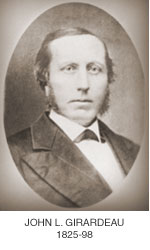
from Sermons of John L. Girardeau, The Signs of the Times in the Church, Matthew 16:3

Question #18: Is it a good idea for an EP church to be a part of a denomination that does not practice EP?

Question #18: Is it a good idea for an EP church to be a part of a denomination that does not practice EP? If there is no EP denomination that meets our approval, is it ok to be an independent church?

Project Psalms

This sounds like a wonderful project that I would like to give my full support to. Go to the Project Psalms website and listen to the sample recording. If you are able to contribute financially, please do so. This will be a very helpful tool in the promotion of Psalm singing throughout the world.

From their website:
The main purpose of Project Psalms is to provide the simplest and most effective tool for learning to sing and memorize the Psalms, initially in English; as a result of learning and singing the Psalms with understanding and zeal, we believe it will strengthen the English-speaking Church unto victory. It is also our desire, God-willing, that at a later stage we will be able to provide a similar tool in Chinese and other major languages across the world.
How was Project Psalms conceived?

Project Psalms was conceived simply by observing that there was a lack of an effective tool for learning the Psalms, meanwhile realizing that God has blessed us with technology and means of communication in this age which could spread an effective tool such as this to His glory. As a result, Project Psalms was underway with the help of just a handful of people around the globe who had the same goal in mind, and each using their gifts, contributed their time and wisdom towards this end. Then, through God’s providence Project Psalms is now almost ready to reach its goal.

Is Project Psalms linked to any particular denomination or congregation?

Project Psalms is not linked to any particular denomination or congregation. We believe all believers in the Universal Church are called to sing Psalms, therefore it is our desire that all denominations and congregations benefit from Project Psalms.

Where may I learn more about the Scottish Psalter of 1650, Psalmody and unaccompanied worship?

You may learn more about the Scottish Psalter of 1650 by visiting http://www.reformation-scotland.org.uk/articles/development-of-scottish-psalter.php, Psalmody by visiting http://reformedonline.com/view/reformedonline/psalms.htm., and unaccompanied worship by visiting http://www.covenanter.org/Girardeau/Instrumental/instrumentalmusic.htm

Question #17: What about the other “songs” in the Bible? Is it ok to sing other inspired portions of Scripture?

Question #17: What about the other “songs” in the Bible? Is it ok to sing other inspired portions of Scripture?

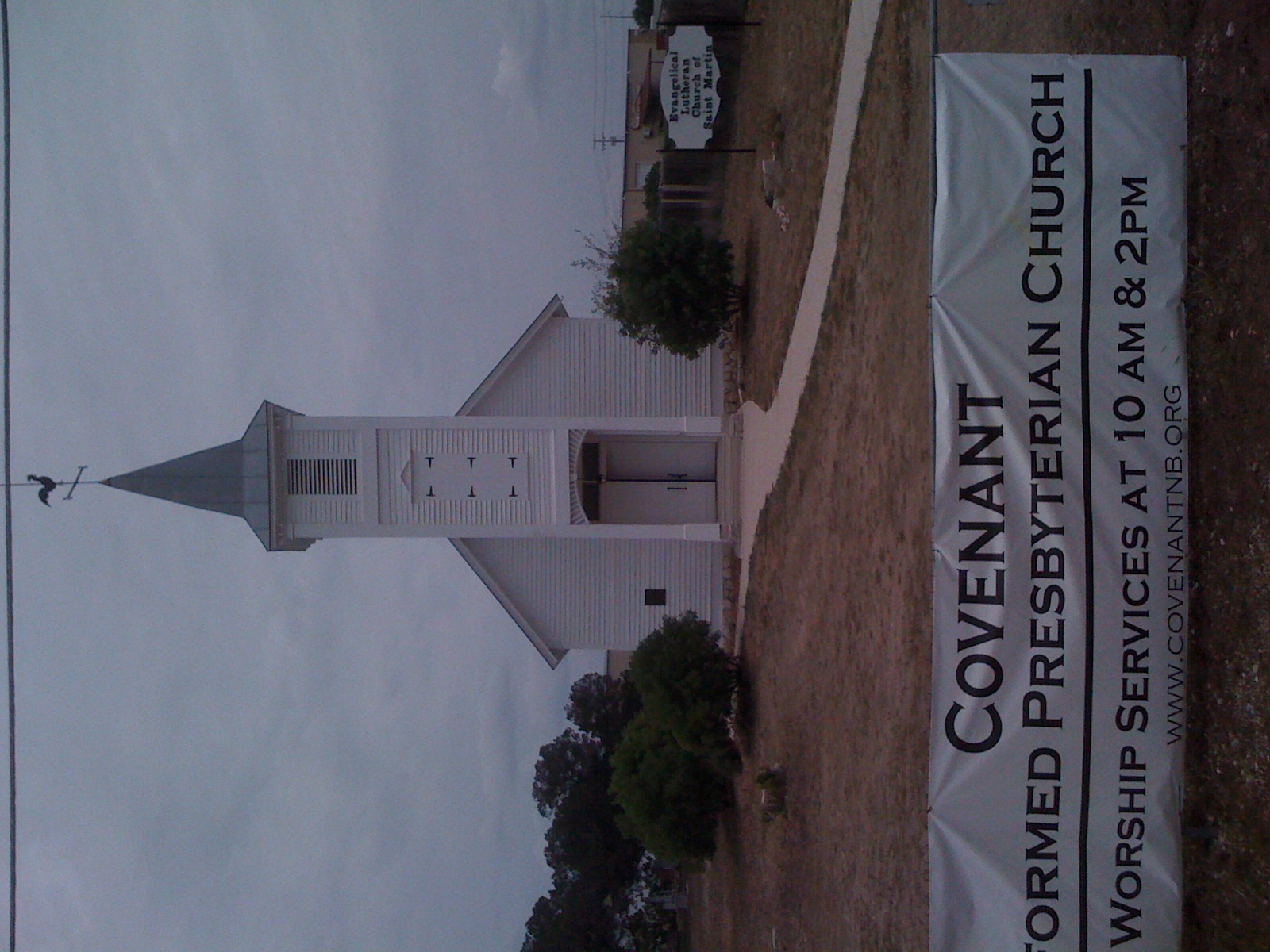
Covenant Reformed Presbyterian Church (RPCGA) moves into its new (old) building for worship this coming Lord’s Day

Covenant Reformed Presbyterian Church (RPCGA) of New Braunfels, TX is moving this week to a new location. The group is in the process of securing a one year lease on an historic church building on loop 337 in New Braunfels. St. Martin Evangelical Lutheran Church was built in 1851 and is the oldest Lutheran Church building in the great state of Texas. Amazingly, the building has not been used for worship for around 100 years. Some members of St. Paul Lutheran Church have worked diligently in recent years to restore the building.

A new website is also available here.

CRPC is under the oversight of the Session of Christ Covenant Reformed Presbyterian Church (RPCGA) of Wylie, TX. They are in the process of applying for Mission Church status with the New Geneva Presbytery of the Reformed Presbyterian Church General Assembly (RPCGA). Their goal is to meet the qualifications of Mission Church status by October of 2011.

Please pray for this group as they work to establish a Reformed Presbyterian Church in New Braunfels, TX.

New RP Church in Glasgow: UPDATE

From the Reformed Presbyterian Church of Scotland newsletter found here:

“In June 2010 the Airdrie RP Congregation began afternoon services in Glasgow out of a desire to see Christ establish an RP congregation in the city once again. This step of faith, supported by the RPCS Presbytery, was realised on Lord’s Day morning 22nd May 2011 when over 100 people gathered in Thornwood Primary School for the formal constitution of the new Glasgow RP Church. Many in the congregation, drawn from Airdrie, Stranraer, and Glasgow had a real sense of just how privileged they were, conscious of the fact that it has been 140 years since the last RP Church was established in Scotland.

The Rev. Andrew Quigley preached on the theme of ‘The Christian Faith, our glorious inheritance in Christ’. He made the point that for too long the RP Church in Scotland had been known for what it did not do. That, he said, was changing. Now we are becoming known as a Church which proclaims the gospel of Christ. A Church which is prayerfully expecting and working to see men, women, young people, and children converted and then conformed to the image of Christ.

The Rev. Gerald Milligan, Moderator of Presbytery, then put the terms of membership of the Reformed Presbyterian Church of Scotland to the 20 men and women who were becoming members. The Church was then formally constituted by the Rev. Milligan as he led the congregation in prayer. After the singing of Psalm 72, Rev. Kenneth Stewart, the newly appointed organising minister, led in prayer and pronounced the benediction. The new congregation has been averaging in the 40s at both morning and evening worship which is a cause for great thanksgiving. We also know of another dozen or so people who have indicated that they will be coming to the church from the middle of June on.”

Rev David Karoon leaves the Free Church of Scotland for the Reformed Presbyterian Church of Scotland

The Reformed Presbyterian Church of Scotland (RPCS) is reporting the following on their website:

“Presbytery met on Saturday the 2nd July and accepted Rev. David Karoon’s application to become a minister in the RPCS. Rev. Karoon was previously a minister in the Free Church of Scotland. ” found here

The Hebrides News gives the following information here on 7/7/11:

“A number of Western Isles worshippers seem set to quit the Free Church and set up a Stornoway branch of a rival denomination in protest of its controversial introduction of hymns and music. A small cohort of about 20 or so disaffected Free Church worshippers, drawn from about eight island households, are expressing varying degrees of interest in breaking away from the long established Hebridean denomination to join a proposed Lewis-based church plant of the Reformed Presbyterian Church of Scotland (RPCS). Rev David Karoon who has resigned as minister of Arran Free Church has joined the Reformed Presbyterian and will take services in Stornoway.  He applied after resigning the Free Church pulpit. A Reformed Presbyterian spokesman confirmed: “Presbytery met on Saturday the 2nd July and accepted Rev David Karoon’s application to become a minister in the RPCS.” It is believed at least one elder has resigned from Stornoway Free Church with a view to joining the rival denomination. Dissidents may look towards the Reformed Presbyterians because they offer exclusive psalm singing and a clean history untainted by bitter splits or breakaway churches which litters the ecclesiastical landscape in Presbyterian Scotland. The tiny Reformed Presbyterian Church of Scotland (RPCS) is now on its way to double its number of churches as a result of the internal anger within the Free Church over ditching exclusive psalm singing and no musical instruments. Admittingly the RPCS only had two small constituted churches in Scotland. The high profile Rev Kenneth Stewart of North Uist and Glasgow – who left the Free over the hymns row – previously criticised the Free Church for “abandoning its constitutional heritage.”  But Rev Kenneth Stewart is now heading a brand new third congregation in the Hebridean area of Westend Glasgow. It took 140 years for it to become the first Scottish RP church plant when it was officially constituted on 22nd May. Just 40 days later, Stornoway seems to be next on the list.”

and also here on 7/7/2011:

“A number of disaffected Free Church members have invited the Reformed Presbyterian Church of Scotland (RPCS) to commence regular Sunday services on Lewis. One possible venue is the small prayer meeting house on Perceval Road in Culnagrein, Stornoway. Rev David Karoon is due to start regular Sunday services from this weekend. The island parishioners are breaking away from the Free in favour of the RPCS services. If interest grows sufficiently a permanent RPCS church may be constituted  and a permanent minister would then be sought. The development  follows the Free Church’s controversial decision to accept hymns and music. Last week, Mr Karoon, who comes from Singapore, resigned as pastor of Arran Free Church because he was opposed to it abandoning its traditional psalm-only stance.  He then applied and was accepted as a minister with the Reformed Presbyterians. A Reformed Presbyterian spokesman confirmed: “Presbytery met on Saturday the 2nd July and accepted Rev David Karoon’s application to become a minister in the RPCS.” Rev Andrew Quigley, minister of the Airdrie RP Church and presently preaching in America, said the Scottish RP Church’s decision to plant a church in Stornoway was taken because a number of Christians asked them to do so. He added that it was a decision motivated solely by a positive desire to proclaim the Gospel. He said: “Our goal, by God’s grace and for His glory, is to see sinners converted to Christ and become committed followers of the Lord.” It is believed at least one elder has resigned from Stornoway Free Church with a view to joining the rival denomination. The tiny Reformed Presbyterian Church of Scotland (RPCS) is now on its way to double its number of churches as a result of the internal anger within the Free Church over ditching exclusive psalm singing and no musical instruments. Admittingly the RPCS only had two small constituted churches in Scotland. But Rev Kenneth Stewart, of North Uist and Glasgow, is now heading a brand new third congregation in the Hebridean area of Westend Glasgow. The church, the first new Scottish RP church plant in 140 years, was formalised on 22nd May. Formerly at Stornoway and Scalpay and, for past ten years or so, at Dowanvale Free in Glasgow, the 48-year-old previously said his position as Free Church preacher was untenable given the determination of so many in the church to drive ahead the contentious change. Though he was last on Lewis recently on behalf of the RPCS he will not be on the island on the run up to the new church services.”

Looking for 1650 Psalter in a lower key…

I got the following message recently, anyone know of some recordings like this?

“I have been trying for some time now to obtain a copy of the Psalms from the 1650 Psalter sung by a all male voice choir. Or, alternatively, a mixed choir where the voices are much lower than on most CDs. Basically, the Psalm singing, especially of choirs, that I have heard in the past all seems to me to be extremely high pitched for my ears, so I have been looking for an alternative, but have not been able to find one yet.”

Question #16: Please tell me, where is singing out of the Bible in scripture?

Question #16: Please tell me, where is singing out of the Bible in scripture?

John states the following under Question #15:

“I could produce *many* examples of where “reformed churches” cleave to the traditions of men, so please do not take it that I am making a mountain out of a molehill over the issue of hands (that was only an *example*). Since the topic is the Psalms, let me provide just one more example; one that, if you are not *truly* committed to the regulative principle of worship, you will likely never have even thought of before:

Please tell me, where is singing out of the Bible in scripture? The truth is, nobody ever sung out of the Bible in Bible times! They didn’t have enough Bibles to go around! They sang the Psalms from *memory*. They didn’t have personal Psalm books or hymn books or anything of the kind. They leaned the Psalms from the communal Bible and taught and sang them from memory. They also taught the other songs of the Lord (such as the song of Moses), and were to know them off by heart. This was even a command of the Lord. The Lord never said, “Sing the song of Moses from a prompt”. Rather, the Law states that men must *teach* the song to all the people: “: “teach it the children of Israel: put it in their mouths”. As we all know, after Jesus and his disciples had broken bread, they sang a Psalm, but they did so *from memory*! No mention of a Psalm book is made *at all*! Psalm books and hymn books in comunal worship are the inventions of men. The Lord has given all men a truly remarkable ability to remember words when put to a tune. Unfortunately, very few people in the church seem to want to worship God with it.

I hope this post has been challenging, and I pray that we will all learn more of the Lord.

“Make a joyful noise unto Jehovah, all ye lands. Serve Jehovah with gladness: come before his presence with singing.” (Psalm 100:1-2)”

John, thank you for the question, we’ll get to it very soon.

Psalms from the Evangelical Presbyterian Church of Australia

I received two wonderful CDs last week from the Evangelical Presbyterian Church of Australia’s Launceston congregation. The first is entitled “Through Him Are All Things” found here. It includes 22 different tracks with some beautiful arrangements of the 1650 Scottish Psalter.

The second CD is entitled “Psalms, Hymns and Songs of the Spirit: A Collection of 17 Psalms from the 1650 Scottish Psalter” performed by the Launceston Quintet, EPCA, prepared by the Pilgrim Covenant Church of Singapore.

Here is a link to the EPCA Youth as they sing some of the arrangments, also YouTube videos are linked.

Here is information regarding the Launceston EPCA congregation and the times and locations of their worship services.

It is so encouraging to hear congregations committed to the singing of the Songs of Zion. It is especially a blessing to hear young folks taking pleasure in singing as well.

Thank you so much to Christine Coleburn from Tasmania for sending these CDs to me.

The new edition of Songs of Zion by Michael Bushell is now available

The long anticipated new (fourth) edition of Songs of Zion by Michael Bushell is now available here  in softcover and here in hardback. The website also provides a preview of the book. This is a wonderful contemporary treatment of the debate over Psalm singing. Bushell covers almost everything from history to exegetical issues.

Here is the product information:

ISBN: 978-0-9830154-1-3
Copyright: Michael Bushell (Standard Copyright License)
Edition: Fourth Edition
Publisher: NorfolkPress
Published: May 23, 2011
Language: English
Pages: 329
Binding; Perfect-bound Paperback
Interior Ink: Black & white
Dimensions (inches): 6.0 wide × 9.0 tall

I am looking forward to seeing what had been added to this new edition. Let us hear your thoughts.

Tri-Lakes RPC is now meeting in Monument, CO

Tri-Lakes RPC is a new church plant of the RPCNA now meeting in Monument, CO every Lord’s Day morning at 9:45.

From the church’s website:

“Tri-Lakes Reformed Church is a recently “daughtered” congregation of the Springs Reformed Church (RPCNA), and we are currently meeting at the Woodmoor Community Center (aka “The Barn”) located at 1691 Woodmoor Dr. in Monument, CO.

The “Reformed” in our name refers to our adherence to the biblical principles reasserted in the Protestant Reformation of the 16th and 17th centuries. Our spiritual heritage particularly comes from the Reformation in Scotland and the Scottish Covenanters.  “Presbyterian” refers to our form of church government. Each congregation is under the oversight of a plurality of elders, who are also part of broader courts known as Presbyteries and Synod.

Our heartfelt desire is to worship God according to His will, in spirit and in truth (John 4:24). We desire to glorify Him in our lives as individual Christians and as a body of believers united to Jesus Christ our Lord. If you live in the Colorado Springs area, or are planning to move or visit here, we invite you to come and worship with us!”

and also regarding worship:

“God desires to be acknowledged as holy by those who approach Him in worship (e.g. Lev. 10:3; Heb. 12:28-29).  Thus we must approach Him on His own terms.  His terms are dictated to us in the Bible, and we can summarize those terms by what is known as the biblical “Regulative Principle of Worship”.  The RPW stated simply is, do what God commands, and whatever is not commanded, do not do (Duet. 12:32).

In accordance with the regulative principle of worship we have a Christ-centered, Word-oriented worship service.  We begin with a call to worship from the Word and come in Christ’s merits into the presence of God.  We pray according to the Word and in Christ’s name.  We sing the Psalms—the songs of the Word—exclusively (and without musical accompaniment), as they primarily speak of Him (e.g. Luke 20:42-44).  We hear the Word read—the Word of Christ (Rom. 10:17).  We hear the Word preached—Christ and Him crucified.  We leave being blessed by the benedictions from the Word—the blessing of Christ. We desire, above all, to be pleasing to God in our worship.  And thus, our worship is not entertainment, but a reverent, yet joyous time of praising and adoring our triune God and the salvation He has provided for His people.”

Please give your prayer and support to Tri-Lakes RPC!