“Now though spiritual songs of mere human composure may have their use, yet our devotion is best secured, where the matter and words are of immediately divine inspiration; and to us David’s Psalms seem plainly intended by those terms of “psalms and hymns and spiritual songs,” which the apostle useth (Eph. 5:19; Col. 3:16).” from the Preface to the Scottish Metrical Psalter
“Perhaps no error has gained more extensive currency among Protestants, in this age of the church, than this:—That every one has an equal and divine right to compose hymns, to be offered in praise to God. Now let no one suppose that we have ought to say against poetry, in general, or against evangelical hymns, in particular—provided they are kept in their own place; but when they come in competition with the Bible, or are used as substitutes for any part of the Bible, then, indeed, the profane intrusion must be met and restricted by scriptural authority and solemn protest. For, if we may accept an “imitation” as a substitute for the book of Psalms without impious presumption; on the same principle imitations of all the other books of the Bible may be accepted as substitutes; and then we arrive at the infidel goal to which the teachings of Drs. Watts, Cuyler, and Musgrave have unconsciously conducted us. Of course we use these three names of distinguished divines merely as typical of a great multitude of equally cultured men—hence the church’s peril.
Innovators of this age are not more popular and self-confident, perhaps, than those whom Isaiah was commissioned to warn, thus: “Behold, all ye that kindle a fire, that compass yourselves about with sparks: walk in the light of your fire, and in the sparks that ye have kindled. This shall ye have of mine hand; ye shall lie down in sorrow.” [Isaiah 50.11.] Should the advocates of the purity of God’s worship in the matter of his praise sometimes utter “nonsense,” or even seem to be obnoxious to the imputation of “stupidity;” their criminality and punishment must be allowed to be comparatively light, when contrasted with the crime and doom of those contemplated in the above awful commination [threatening] by the Lord’s prophet.”
Meeting Location:
The Holiday Inn Express
700 East Central Parkway
Plano, TX 75074
Schedule:
9:30 am – Bible Study (all ages)
10:45 am – Worship
12:00 pm – Lunch! (Bring your own sack lunch)
1:00 pm – Open ended fellowship, sermon reflection, and psalm singing until everyone decides to go home!
“XXI. What, then, is the duty of Christian churches in this matter? In whatever manner governed, they ought, as Protestants, carefully to avoid all unauthorized worship, either in the matter or manner or praise; to abide by that which is commanded, recollecting that all the embellishments and meretricious ornaments, with which human skill invests the matter and manner or our praise, are similar to the armour or Saul when placed on David. 1 Sam. 17:39. They form no appointed part of the “armour of God” in the Christian “warfare,” Eph. 6:11, and they must be cast aside, or we will incur the displeasure of “a jealous God;” spread, under his disapprobation, spiritual death over the churches of Christ; cause his children to weep in secret places; the men of this world to rejoice, and the enemies of Christ to blaspheme.
XXII. What, then, should we sing to the praise of God? Our own edification and safety lie in singing only the Book of Psalms; not any “imitation,” but “the word of Christ” itself, in the most literal and correct version which can be obtained. Notwithstanding numerous minor defects, the Scotch or Presbyterian “version is, upon the whole, the best.” When using it, “we have the satisfaction to know, that we utter praise in the very words of inspiration;” and in the opinion of Boswell, “it is vain to think of having a better.” Of the version of Sternhold and Hopkins, the Rev. Wm. Romaine says, “It is generally the sentiment of the Holy Spirit. That is very rarely lost, and this should silence every objection—it is the word of God. Moreover, the version comes nearer to the original than any I have ever seen except the Scotch.” Some judicious verbal amendments, by the omission of antiquated words, would be truly desirable if Presbyterians could unanimously make them.
XXIII. In what manner, then, should we sing these sacred songs to the praise of Jehovah? Always as an act of divine worship, with the spirit and with the understanding, with our voice, and with grace in our hearts, making melody to the Lord—individually—in families—and in the house of God. Avoiding the decorations of a theatrical and sentimental taste, and delighting ourselves in the word of Christ after the inward man, we will grow in grace and in the knowledge of our Lord and Saviour Jesus Christ; we will come to an innumerable company of angels, to the spirits of just men made perfect, and daily join with them in singing the song of Moses and of the Lamb.”
“What poetry is to be compared with the Psalms of God? Who can make the singing of any human verses an ordinance, or give a blessing to them, such as is promised, and is given to the singing of Psalms? For what reason, then, are they set aside in the church? Why are the words of man’s genius preferred to the words of inspiration? Singing of psalms is commanded by divine authority, and commanded as a part of divine worship; not left to man’s wisdom how to provide for it, but is expressly provided for in the good word of God. And is not great contempt put upon this infinitely wise provision, when it is quite disused in the church, and man’s word is preferred to it?
What would you think of them who should throw aside all the Scripture, and never read it all in the congregation? And is it not an offense of the like nature, totally to neglect a part, a chief part of it, which was recorded for the use of the church, and in which its members were to sing the high praises of their God? It is hereby treated as useless and good for nothing. A very gross affront is put upon the love and wisdom which revealed this divine collection of hymns, and the church is deprived of the blessing promised to the singing of them, whereby it is robbed of one of its choicest treasures. If any thing be sacrilege, this is. The Psalms are stolen out of the church, and thereby the members are deprived of the blessings promised to the singing of them; for God will not give you the end if you neglect the means. Frequent are his commands in the Old Testament to sing psalms, and we have several in the New. for instance, let the word (not something beside it, but the word) of Christ itself dwell in you richly in all wisdom, teaching and admonishing one another in psalms, and hymns, and spiritual songs. These are not different things, but different names for the same collection of Psalms, as they treat of different subjects.”
This work was recently added to the Internet Archive site. I remember looking for a copy online last year, but it was unavailable for free. Thanks to Sean McDonald for bringing it to my attention!
Matthew McMahon has republished this work here if you would like a printed copy.
This is from the Lulu site concerning McMahon’s reprint: “Thomas Ford (1598–1674) was a Calvinistic, Reformed nonconformist divine, who sat on the Westminster Assembly. The Puritans believed in Exclusive Psalmody – and the Westminster Confession demonstrates their position. However, there are few works that were written as a whole explaining why this is so by a Westminster divine. This work by Thomas Ford does just that. His views demonstrate the majority view in Christendom up and until his era, and he sits in company with the best theologians and preachers through church history on the subject. He covers, 1. That we must sing. 2. What we must sing. 3. How we must sing. And, 4. Why we must sing. His main text is Ephesians 5:19, “Speaking to yourselves in psalms and hymns and spiritual songs…” This is an extremely valuable treatise on God’s form of instituted worship and the regulative principle. This is not a scan or facsimile, and has been updated in modern English for easy reading. It also has an active table of contents for electronic versions.”
Dr. Dennis Prutow has recently released a new book on Biblical Worship entitled Public Worship 101 available here or directly from the Amazon site. A previous post on the this website discussed the online course by Dr. Prutow called The Ministry of Worship (syllabus). This new book is part of the coursework for Ministry of Worship.
From the Westminster Evagelistic Ministries RPTS site:
“Public Worship 101 is an introduction to the Biblical theology of worship, the elements of worship, exclusive Psalmody, and a cappella Psalmody. It follows the basic outline of Dr. Prutow’s Ministry of Worship classes with much more detail, including the addition of important historical data. The purpose of the book is to demonstrate that, in Biblical worship, God renews His covenant with His people as they draw near to Him in the place He prescribes (the gathered congregation), on the day He prescribes, in the manner He prescribes, with the elements He prescribes, including the praise He prescribes both in content, exclusive Psalmody, and manner, a cappella Psalmody, using an order properly deduced from Scripture. Whether this purpose is accomplished is for you, the reader, to judge.”
A review of the book by Pastor Barry York from Amazon:
“5.0 out of 5 stars Pastor Barry York, Kokomo, Indiana March 19, 2013
By Dennis J. Prutow
Sadly, when it comes to worship, the Western, evangelical church has its thinking backwards. In both word and action, the modern church displays the common belief that New Testament worship is not as serious as in the days of Moses. Yet as the book of Hebrews testifies, this view is simply false. For unlike the days of old, the concern of worship now is not with the blood of goats and lambs, but with the precious blood of Christ as displayed in Word, sacrament, prayer, and praise. We are no longer dealing in shadows and types, but with the living reality of Jesus.That is why this work by Dennis Prutow is so timely and needed. With the precision of his military mind, the experience of his seminary teaching, and the warmth of his pastoral heart, Prutow offers this salvo into what many have called the “worship wars.” Public Worship 101 offers a solid Biblical, historical, and theological case for the principles of worship as outlined in the Westminster Confession of Faith, with special attention given to the neglected means of a cappella psalm singing. Whether or not you agree with the conclusions, every minister and those in training should wrestle with the case Prutow puts forth. As Jeremiah Burroughs said in Gospel Worship, “Those who enter into public places, and especially such places as concern the worship of God, need to have the fear of God much upon them when they first enter into those places.” Prutow’s work will help those preparing to enter into the sanctuary and the pulpit to develop this much needed fear once again.An endorsement written to the author December 12, 2012″
“It is, by being instrumental in the salvation of souls, that the church promotes the glory, and secures the worship, of Jehovah. Divine worship can be celebrated, and the praise of the glory of divine grace can be shewn forth, only by those who are ‘saved and called with an holy calling, not according to their works, but according to his own purpose and grace, which was given us in Christ Jesus, before the world began:’ and this work of salvation is carried on in and by the church. The church, by subjecting the conscience to the authority of Christ, by maintaining wholesome discipline, and by affording opportunity of communion with God and with his saints, tends powerfully to enlighten the understanding, to enliven the affections, to restrain the passions, to promote Gospel morality, and to advance the divine life in the soul. ‘The Lord added to the church such as should be saved.’ ‘He gave some, apostles; and some, prophets; and some, evangelists; and some, pastors and teachers: for the perfecting of the saints, for the work of the ministry, for the edifying of the body of Christ.’
Such are the ends subserved by the existence of a church in the world. And it is carefully to be observed, that all these ends are brought about by the mediatorial administration of the Saviour. He it is who sends forth his light and his truth to gladden and direct an ignorant and benighted world; who prompts and enables men to celebrate the ordinances of God’s worship; and who carries forward the work of salvation in the souls of believers.”
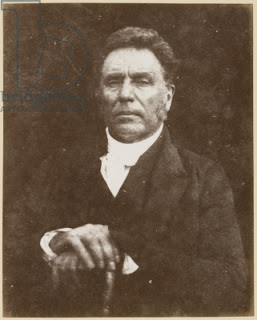
William Symington 1795-1862 This picture is listed on a few websites for Symington, can anyone confirm?
“By setting up a church in the world the Mediator has provided for the public celebration of Divine worship. It is every way proper that some acts of public homage should be paid to the God of the whole earth. The private adoration of individuals would seem not to be all the honour that is due to Him whose claims are so universal and transcendent. He is certainly entitled to acknowledgment in the most public and open manner possible. This is secured by the existence of a visible church, in which his being, perfections, purposes, and works, are publicly discussed; in which his praises are publicly sung, and in which united and public supplications are offered at his throne of grace. Even supposing that, for this end, secret acts of worship might suffice, it may fairly be questioned whether the spirit of such could be kept up, without the influence arising from public institutions. The devotions of the sanctuary, doubtless, exert, and are designed to exert, no small influence on those of the closet and the family. The lamp of personal or domestic piety will send forth but a dim and sickly ray, unless trimmed and replenished by frequent visits to the house of the Lord. When the believer feels those fervent emotions that are represented by his soul thirsting for God, and under the impulse of which he is stirred up to seek the Lord with great earnestness, it is that he may ‘see the power and glory of the Lord as he had seen them before in the sanctuary.’ If the psalmist David poured forth the sweetest and warmest strains of devotion in the wilderness of Judea and in the forest of Hareth, we must go back, for the secret of his high and holy inspiration, to the days when he trod the courts of the temple,—days which not merely exerted a reflex influence on his solitary exercises, but which, so far from making him contented with these, caused his soul still to long, yea even faint, for the courts of the Lord, and to count a day in God’s house better than a thousand. If we would rise to true elevation of heart in the closet, we must ‘lift up our hands in the sanctuary.’ So necessary is the church to the proper worship of God.”
“From the 1871 Associate Reformed Presbyterian Synod’s “Summary of Doctrines”:
ON PSALMODY
“It is the will of God, that the sacred songs contained in the Book of Psalms be sung in His worship, both public and private, to the end of the world; and the rich variety and perfect purity of their matter, the blessing of God upon them in every age and the edification of the church thence arising, set the propriety of singing them in a convincing light ; nor shall any human composures be sung in any of the Associate Reformed churches.” This regulation not only asserts the propriety of singing the Psalms in Christian worship, but forbids the use of human composures, and is supported by the following, among other considerations:
1. The Book of Psalms is a portion of the “Word of God and is, therefore, the truth most pure; human productions may, and often do contain error.
2. The true idea of praise is the celebration of God’s perfections and work; this the Infinite God, who only knows Himself can express inconceivably better than man, and we should reverently leave the expression of it to Him.
3. God has appointed the Book of Psalms to be used in His praise; human composures are unauthorized.
4. When we lay aside God’s own inspired Psalter in order to use man’s in the place of it, we seem to dishonor God and give man the preference.
5. The hymn books prepared by churches are sectarian, give prominence to their peculiar dogmas, and thereby perpetuate the divisions of the church; the Book of Psalms, like the Bible of which it is a part, is common ground on which the whole visible church may stand.”
“God has given us a large collection of psalms, has commanded them to be sung in the church, and has promised his blessing to the singing of them. No respect here must be paid to names or authorities, although they be the greatest on earth, because no one can dispense with the command of God, and no one can by his wit compose hymns to be compared with the psalms of God. I want a name for that man who should pretend that he could make better hymns than the Holy Ghost. His collection is large enough, it wants no addition. It is perfect, as its author, and not capable of any improvement. Why in such a case would any man in the world take it into his head to sit down to write hymns for the use of the church? It is just the same as if he was to write a new Bible, not only better than the old, but so much better that the old may be thrown aside. What a blasphemous attempt! And yet our hymn [singers], inadvertently I hope, have come very near to this blasphemy, for they shut out the Psalms, introduce their own verses into the church, sing them with great delight and as they fancy with great profit, although the whole practice be in direct opposition to the command of God, and therefore cannot possibly be accompanied with the blessing of God.”
“This Anglican evangelical was an ardent advocate of Psalm singing (of which his favourite was Psalm 121; p. 298). Shenton summarises his position:
“Romaine’s zeal for the Psalms was principally directed towards upholding and, where necessary, re-establishing biblical theology in the church. He wanted the pure Word of God read, preached and sung by Christian congregations. Nothing, in his view, should be countenanced that threatened the supremacy of Scripture. He strongly opposed hymns on the ground that they were man’s creation and not God’s, and that they lowered worship to the level of entertainment (pp. 276, 278).”
Romaine saw hymn singing, according to George Ella, as a
“substitute for true worship and a grave departure from the scriptural norm. Wherever there was a lack of “vital religion,” he thought, people left off praying, singing the Psalms and hearing the Word, and descended into singing [Isaac] Watt’s “flights of fancy,” along with other flippant pastimes. The words of man had become more important to a backsliding church than the word of God (p. 278).”
Angus’ review of An Iron Pillar, The Life and Times of William Romaine by Tim Shenton can be found in full here.
Question #22: The Bible tells us to sing a “new song”. This seems to suggest we should not be limited to singing only the Old Testament Psalms. Isn’t that also proof that we should compose new hymns?
“The only way to leave our children blessed and happy is to leave them rightly instructed in God’s true religion. For what avails all that is in the earth, if perpetual condemnation follows death – yea, and God’s vengeance also goes before the same? as of necessity they must where true knowledge of God is absent. And therefore God straitly commands the fathers to teach their sons the laws, ceremonies, and rites. And unto Abraham he opened the secret of his counsel touching the destruction of Sodom and Gomorrah: “Because,” says the Lord,“I know that Abraham will teach his children, that they fear my name.” [Gen. 18:19] Then God would that the life and conversation of the fathers should be a schoolmaster to the children. Plain it is, that the true knowledge of God is not born with man, neither yet comes it unto him by natural power, but he must have schoolmasters to train him up in that which he lacks. The chief schoolmasters (the Holy Ghost excepted) of the age following, are the works, practices, and life of the forefathers. And experience does so teach us, that the children are so bound and addicted to the works and practices of their fathers (and especially if it is in idolatry), that scarcely can the power of God, speaking by his own word (as the prophets oft complain), reave or pluck any back from their fathers’ footsteps.
Now, if you, altogether refusing God, stoop under idolatry, what schoolmasters are you to your posterity? Assuredly even such as the cruel and foolish fathers
that, consenting to Jeroboam and to his idolatry, left to their children a pattern of perdition. What image [do] you show to your children; yea, in what estate [do] you leave them, both touching body and soul? Blinded in idolatry (alas, I fear and tremble to pronounce it), and bound slaves to the devil, without hope of redemption, or light to be received, before God takes vengeance upon their disobedience!
I speak to you, O natural fathers: Behold your children with the eye of mercy, and consider the end of their creation. Cruelty it were to save yourselves, and damn them! But O, more than cruelty and madness that cannot be expressed, if, for the pleasure of a moment, you deprive yourselves and your posterity of that eternal joy that is ordained for them that continue in confession of Christ’s name to the end, which assuredly you do if, without resistance altogether, you return to idolatry again. If natural love, fatherly affection, reverence of God, fear of torment, or yet hope of life move you, then will you gainstand that abominable idol; which if you do not, then, alas! the sun is gone down and the light is quite lost, the trumpet is ceased, and idolatry is placed in quietness and rest. But if God shall strengthen you (as unfeignedly I pray his Majesty may), then there is but a dark misty cloud overspread the sun for a moment, which shortly shall vanish, so that the beams afterwards shall be sevenfold more bright and amiable nor [than] they were before. Your patience and constancy shall be a louder trumpet to your posterity, than were all the voices of the prophets that instructed you; and so is not the trumpet ceased so long as any boldly resist idolatry.
And, therefore, for the tender mercies of God, arm yourselves to stand with Christ in this his short battle. Flee from that abominable idol, the maintainers whereof shall not escape the vengeance of God. Let it be known to your posterity that you were Christians and not idolaters; that you learned Christ in time of rest, and boldly professed him in time of trouble. Think you these precepts are sharp and hard to be observed? And yet again, I affirm, that compared with the plagues that assuredly shall fall upon obstinate idolaters, they shall be found easy and light. For avoiding of idolatry you may perchance be compelled to leave your native country and realm; but obeyers of idolatry, without end, shall be compelled, body and soul, to burn in hell. For avoiding idolatry, your substance shall be spoiled; but for obeying idolatry, heavenly riches shall be lost. For avoiding of idolatry you may fall in the hands of earthly tyrants; but obeyers, maintainers, and consenters to idolatry shall not escape the hands of the living God. For avoiding idolatry, your children shall be deprived of father, of friends, riches, and of earthly rest; but by obeying of idolatry they shall be left without the knowledge of his word, and without hope of his kingdom.
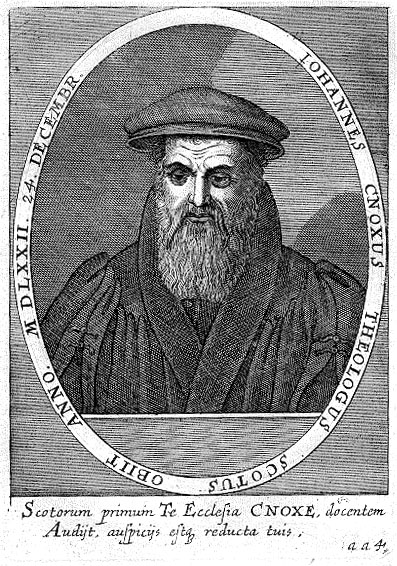
Consider, dear brethren, how much more dolorous and fearful it is to be tormented in hell, than to suffer trouble in earth; to be deprived of heavenly joy, than to be robbed of transitory riches; to fall into the hands of the living God, than to obey man’s vain and uncertain displeasure; to leave our children destitute of God, than to leave them unprovided before the world. So much more fearful is it to obey idolatry, or by dissembling to consent to the same, than by avoiding and fleeing from the abomination, to suffer what inconvenience may follow thereupon by man’s tyranny. For the extremity of the one is but transitory pain, and the most easy of the other is to suffer in the fire that never shall have end.” John Knox
“In these words most evidently is expressed unto us, why God wills that we avoid all fellowship with idolatry, and with the maintainers of the same; in which are three things appertaining to our purpose chiefly to be noted. First, that the Holy Ghost pronounces and gives warning unto us, that maintainers of idolatry, and provokers to the same, intend to draw us from God; and therefore he wills that we neither obey them (be they kings or be they queens), neither yet that we conceal their impiety (were they son, daughter, or wife), if we will have the league to stand betwixt God and us [Deut. 13:6-18]. And here is the confirming of my first cause, why it is necessary that we avoid idolatry, because that otherwise we declare ourselves little to regard the league and covenant of God; for that league requires that we declare ourselves enemies to all sorts of idolatry. Secondly, it is to be noted, that idolatry so incenses and kindles the wrath of God, that it is never quenched till the offenders, and all that they possess, are destroyed from the earth; for he commanded them to be stoned to death, and their substance to be burnt; and if a city offended, that it shall be altogether destroyed without mercy. This may appear a severe and rigorous judgment. But if you shall consider the cause, God’s great mercy towards us shall be espied; for thereunto he declares himself [an] enemy unto our enemies. For all those that would draw us from God ( be they kings or queens), being of the devil’s nature, are enemies unto God, and therefore God wills that in such cases we declare ourselves enemies unto them; because he would that we should understand how odious is idolatry in his presence, and how that we cannot keep the league betwixt him and us inviolate if we favour, follow, or spare idolaters. ‘Lord, open our eyes that we may understand the great necessity of this thy precept. Amen.'”
“We … present unto you … a form and order of a reformed church, limited within the compass of God’s word, which our Saviour has left unto us as only [alone] sufficient to govern all our actions by; so that whatsoever is added to this word by man’s device, seem it never so good, holy, or beautiful, yet before God, which is jealous and cannot admit any companion or counsellor, it is evil, wicked, and abominable.” John Knox
“Verily no man well instructed, or of sound judgment, will deny (as I think) that lights and crossings, or such like trifles, sprang or issued out of superstition. Whereupon I am persuaded that they which retain these ceremonies in a free choice, when they may otherwise do, they are over-greedy and desirous to drink of the dregs. Neither do I see to what purpose it is to burden the church with trifling and unprofitable ceremonies – or, as I may term them with their proper name, hurtful and offensive ceremonies, when there is liberty to have a simple and pure order.” John Knox
“ ‘My sheep hear my voice, and a stranger they will not hear, but flee from him.’ [John 10:5] To hear his voice (which is also the voice of God the Father) is to understand and obey the same; and to flee from a stranger is to admit none other doctrine, worshipping, nor honouring God than has proceeded from his own mouth – as he himself testifies, saying, ‘All that are of the verity, hear my voice.'[ John 18:37] ” John Knox
Strong words from John Knox during an early debate with a Roman Catholic … Comments?
Roman Catholic: “Why may not the kirk, for good causes, devise ceremonies to decor the sacraments, and others [of ] God’s service?”
Knox: “Because, the kirk ought to do nothing but in faith, and ought not to go before, but is bound to follow, the voice of the true Pastor.
It is not enough that man invents a ceremony and then gives it a signification, according to his pleasure. For so might the ceremonies of the Gentiles, and this day the ceremonies of Mohammed, be maintained. But if that anything proceeds from faith, it must have the word of God for the assurance. For you are not ignorant, that “faith comes by hearing, and hearing by the word of God.” [Rom. 10:17] Now, if you will prove that your ceremonies proceed from faith, and do please God, you must prove that God in expressed words has commanded them; or else you shall never prove that they proceed from faith, nor yet that they please God; but that they are sin, and do displease him, according to the words of the apostle, “Whatsoever is not of faith is sin.” [Rom. 14:23]
The question was not, nor is not, of meat or drink, whereunto the kingdom of God consists not; but the question is of God’s true worshipping, without the which we can have no society with God…. May we cast away what we please, and retain what we please? If it be well remembered, Moses, in the name of God, says to the people of Israel, “All that the Lord thy God commands thee to do, that do thou to the Lord thy God: Add nothing to it; diminish nothing from it.” By this rule, think I, the kirk of Christ will measure God’s religion, and not by that which seems good in their own eyes. [Cf. Deut. 12:32; 12:8.]
That God’s word damns your ceremonies, it is evident; for the plain and strait commandment of God is,“Not that thing which appears good in thy eyes shalt thou do to the Lord thy God, but what the Lord thy God has commanded thee; that do thou; add nothing to it; diminish nothing from it.” Now unless you are able to prove that God has commanded your ceremonies, this his former commandment will damn both you and them. [Cf. Deut. 4:2; 12:8, 32.]”
Selected Writings of John Knox (Dallas: Presbyterian Heritage Publications, 1995), 1:12-16.

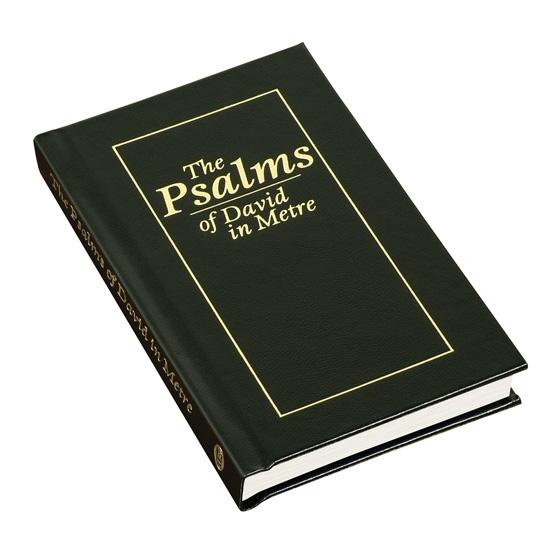 “Now though spiritual songs of mere human composure may have their use, yet our devotion is best secured, where the matter and words are of immediately divine inspiration; and to us David’s Psalms seem plainly intended by those terms of “psalms and hymns and spiritual songs,” which the apostle useth (Eph. 5:19; Col. 3:16).” from the Preface to the Scottish Metrical Psalter


 Exclusive Psalmody