Thanks to Mr. Chris Coldwell and Rev. Matthew Winzer for bringing this review to us free of charge. There is a link in the post below to download the PDF. The Confessional Presbyterian Journal (highly recommended by this EP website) is available there as well. The following is from Mr. Coldwell’s website:
“The Confessional Presbyterian 4 (2008) 253–266. Review: Nick Needham, ‘Westminster and worship: psalms, hymns, and musical instruments,’ In The Westminster Confession into the 21st Century, 2, ed. J. Ligon Duncan (Ross-shire, Scotland: Christian Focus Publications, 2005). 540 pages. ISBN 978-1-857-92878-5. $37.99. Reviewed by Matthew Winzer, Grace Presbyterian Church (Australian Free Church), Rockhampton, Queensland, Australia. Download PDF.
[Synopsis: Matthew Winzer briefly critiques Mr. Needham’s handling of the regulative principle of worship before reviewing at length his handling of the Westminster Assembly’s view of Singing of Psalms. Sections are: The Historical-contextual Interpretation of “Singing of Psalms” in the Westminster formularies; Th e Work and Proceedings of the Westminster Assembly; External Evidence: the Milieu of 1640s London; Advocates for Exclusive Psalmody Amongst the Westminster Assembly of Divines; and The Wider Puritan Tradition. Mr. Winzer then briefly covers Mr. Needham’s handling of the Assembly’s view of musical instruments in worship before concluding the review. A lengthy footnote handles the “other Scripture Songs” project of the Scottish General Assembly running parallel with what would become the 1650 Scottish Psalter.]
Westminster and Worship Examined: A Review of Nick Needham’s essay on the Westminster Confession of Faith’s teaching concerning the regulative principle, the singing of psalms, and the use of musical instruments in the public worship of God.
An attempt has recently been made by Nick Needham “to give an accurate historical judgment relating to the [Westminster] Assembly’s views and deliverances relating to exclusive psalmody and non-instrumental worship.”1 If, however, one were expecting to find a detailed examination of the writings of the divines, he would be sorely disappointed. Throughout the article reference is made to only one fragment of writing from a member of the Assembly; all other quotations are taken from the statements of individual Puritans who neither attended the Westminster Assembly nor spoke specifically to the issue of exclusive psalmody. Moreover, no use has been made of the valuable historical material to be found in the writings of those members who have provided some sketches of its proceedings. Given this regrettable state of affairs, it must be said that the article fails in its attempt to provide an accurate historical judgment on the Assembly’s views. Whoever is the rightful possessor of the views Mr. Needham has represented, they have not been shown to belong to the Westminster Assembly….”
[The Heidelblog has recently closed so the links below are dead. I am working on securing permission to put the Heidelblog quotes here for future reference.]
[Permission denied! Oh well, there are some good comments worth reading at the Greenbaggins website. Rev. Keister, thank you for bringing this issue up for discussion.]
I am enjoying a good discussion on the use of the Psalms and the Psalter between Dr. R. Scott Clark and Lane Keister on the Heidelblog and Greenbaggins websites. Lots of good conversation.
If you join in the discussion, let us know your thoughts…
I must comment that the articles by Dr. Clark are excellent. He responds to some common misconceptions regarding the Psalter and encourages us to be both biblical and confessional in our worship. A few selections from Dr. Clark’s first post:
“I don’t accept the premise that, for the purposes of called, stated, public worship services to which God’s people are required to attend under pain of church discipline, there are such things as “good” non-canonical songs that might be imposed by a consistory or a session upon a congregation. Here’s an analogy. We would all admit that there are skilled artistic renderings that purport to represent God the Son incarnate, our Lord Jesus. Now, we know that no such representation is possible because such representations are necessarily a figment of the artist’s imagination. Confessional Reformed folk cannot tolerate even a “good” painting, i.e., an artistically skilled attempt to represent a first century Jewish male, because it violates the law of God. The same is true for ostensibly good hymns. However permissible it may be to sing well-written hymns with solid biblical content or even paraphrases (e.g., Luther’s paraphrase of Ps 46 is a personal favorite) in a private context their use in the context of public worship is something else altogether.”
“As I argued in RRC, the URCNA synod erred when it essentially codified the mistakes of the CRC from the 1930s. That’s why I distinguish between “conservatives” (e.g., the URCs on worship) and “confessionalists.” I’m not satisfied with mere conservatism especially since we’re conserving a mistake.”
“I have yet to see a single instance in which any of the paraphrases improves upon God’s Word. In services where the order of worship calls for hymn I am sometimes forced to find a psalm to sing or read quietly during the service (there should be no disruption of public worship). Almost without fail the psalm I’m reading/singing is more appropriate to the service than the hymn (or paraphrase) the congregation is singing. I’ve been in many services where it is evident the minister did not even consider a psalm. There are practical reasons for this. 1) Those ministers who, like me, come from non-Christian backgrounds are typically ignorant of the psalms. 2) Those ministers who, like me, come from broad evangelicalism are ignorant of the psalms. 3) Those ministers who were raised in most NAPARC churches are ignorant of the psalms. Our first instinct is to pick a hymn. If it’s a progressive setting it will be a favorite chorus. If it’s a “traditional” setting then it will be “The Church’s One Foundation. To the degree this is true it says more about the inadequacy of those planning the service than it does about the insufficiency of God’s Word.”
“…There is at least a difference of degrees and arguably a a difference in kind between paraphrases and translations. One is not the other. Historically, confessional Reformed churches have sought to make the most accurate translations possible. We produced the Geneva Bible not a paraphrase. Our solution to difficult passages was to teach via marginal notes not to make the problems go away via paraphrases.”
Again, the brief article by Dr. Clark is an excellent summary our our confessional beliefs regarding song in worship. Please give it a read.
“Pageland Reformed Presbyterian Church is a ministry of the Reformed Presbyterian Church of North America (RPCNA). We are located in Pageland, South Carolina – 55 minutes from downtown Charlotte, North Carolina and 75 minutes from downtown Columbia, South Carolina.
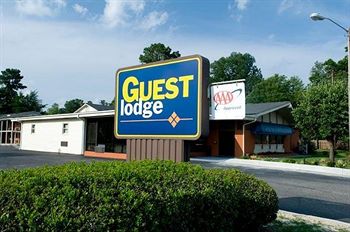
We meet for worship at 11:00 am in the Cambridge Hall at the Guest Lodge located at:
910 West McGregor Street
Pageland, SC 29728-2014
Please email pagelandrpc@gmail.com or call 843.622.5853 with any questions.
What we believe:
Our beliefs all stem from a full commitment to the authority of the Bible as the inerrant, infallible Word of God. This means that we believe in the Triune God: Father, Son, and Holy Spirit. We acknowledge our total inability to save ourselves and, in faith, depend on Christ alone as our Savior. We acknowledge Him as Lord in every area of life, and we vow together to advance His Kingdom on earth.
God made man in His image to glorify and enjoy Him. In the public worship of the church, the people of God, redeemed by Christ, glorify and enjoy the triune God, Father, Son, and Holy Spirit, as He reveals Himself in His Word.
Jesus Christ, as our Prophet, Priest and King, has revealed to His people how to worship Him in a pleasing manner. Therefore, “the acceptable way of worshiping the true God is instituted by Himself and so limited by His own revealed will, that He may not be worshiped according to the imaginations and devices of men, or the suggestions of Satan, under any visible representation, or any other way not prescribed in the Holy Scriptures” (Westminster Confession of Faith 21:1 [p.49]). This means true worship is commanded by God only; false worship is anything not commanded. In other words, if God did not direct us in the Bible to do something–we do not do it.”
A news article from November in the Progressive Journal from here quotes the Rev. Frank Smith, “We have maintained the practice of singing the Biblical songs in public worship without musical accompaniment. We’ve maintained those standards through the years. We believe this is the way that God desires to be worshiped. We believe that worship should be worship.”
—————————————————————————————
Please pray for a continuous “supply” of Pulpit Supply as our brethren in SC begin to hold worship services on a regular basis.
The Rev. Kenneth Stewart, formerly of Dowenvale Free Church of Scotland
The following is from the Reformed Presbyterian Church of Scotland website.
“The RPCS has received an application from Rev. Kenneth Stewart (formerly minister of Dowanvale Free Church of Scotland) to be received as a minister in the RPCS.” found here
And later as of April 16th:
“Rev. Kenneth Stewart, upon his assent to the ordination vows of the RPCS, became a minister in the Reformed Presbyterian Church of Scotland on Saturday the 16th April.”
Any thoughts?
Thanks to Connor Quigley for bringing this to our attention.
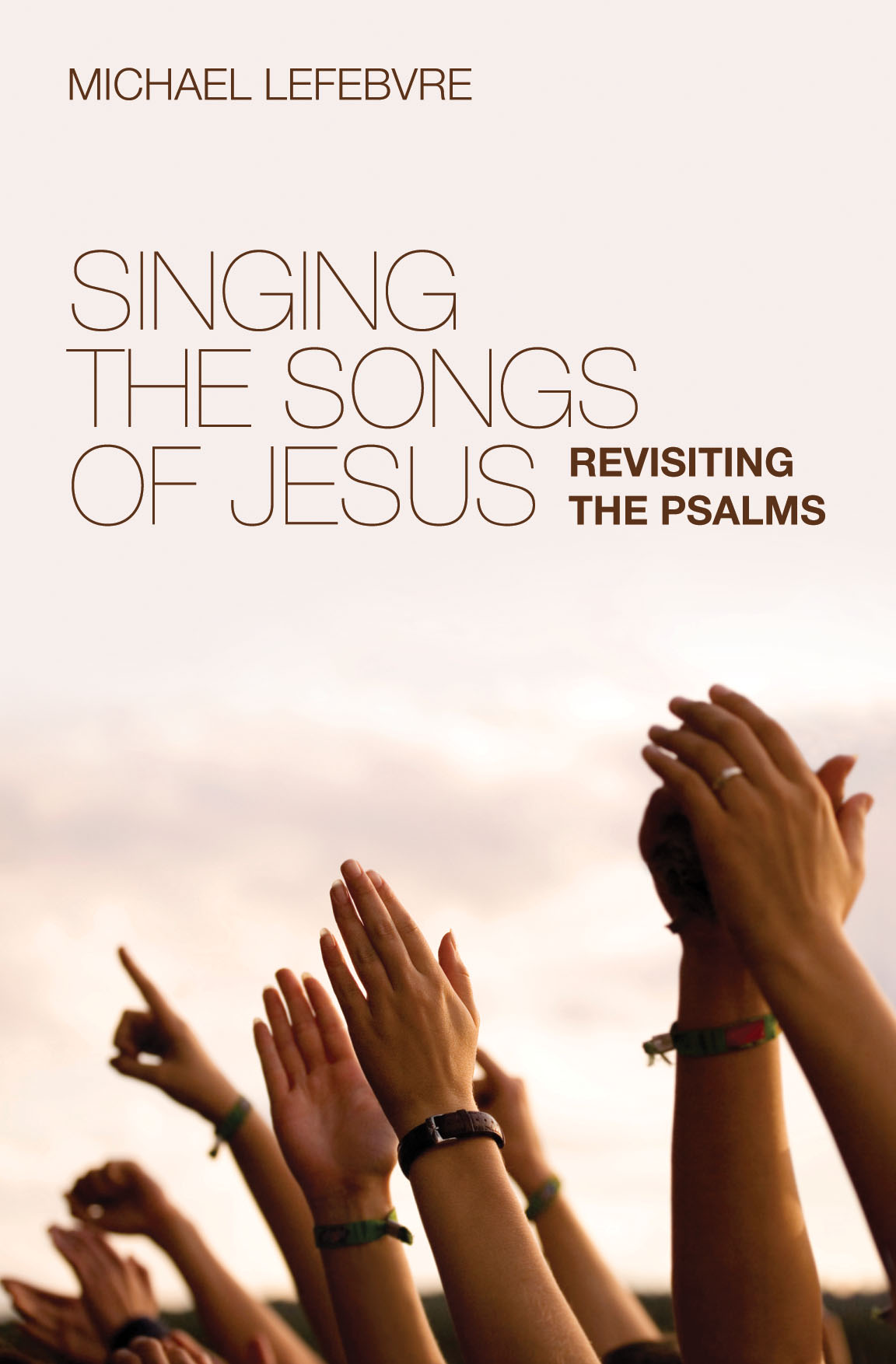
Rev. Malcolm Maclean of Greyfriars Free Church provides a review of Singing the Songs of Jesus. Here is a sample:
“This easily-read book by the best publisher provides an interesting approach to using the psalms. It is not a defence of exclusive psalmody (although the author wisely agrees with that view). Instead the book is about spiritual benefits that individuals and congregations will receive through using the Psalms in their worship services. Even at a basic level, the Psalms, because they are divinely inspired, inform us of the features that God wants us to sing about when we are worshipping him…
…Since Jesus sings the psalms with us, it means that in a sense the psalms are conversations with Jesus about various aspects of his person and work. The author explores this reality in chapters 3 and 4. When using the Psalms, sometimes we sing with the King about God and his ways, sometimes we sing to the King, and sometimes we sing to one another in the presence of the King. In the Psalms, we sing about his deity, his humanity, his birth, his life, his love of God’s law, his atoning death, his resurrection, his ascension, his exaltation, his kingdom, his return, his role as Judge, his role as Priest, his role as Prophet, his role as Shepherd, and many other facets of his person and work. The author here helped me understand further how Paul could in Colossians 3 equate the communal singing of ‘psalms, hymns and spiritual songs’ with the ‘word of Christ’…
…In this short book of 160 pages, we have a good summary of the theology (purpose) of the Psalms. The author provides clear principles for interpreting the Psalms in a Christ-centred way and shows us how we can develop a precious intimacy with the King through ongoing usage of the Psalms. Using them in public worship is a God-given way of exalting King Jesus as we see him fulfil his role as Leader of the praise of God’s people.”
Thanks to Scott Maciver for bringing the book and review to our attention.
Further reviews from the publisher…
“This book powerfully reminds us that the church has for too long ignored a vibrant source of devotion-the song book of Jesus…we can’t afford to neglect this divinely inspired song book that God has given us.” Donald W. Sweeting ~ President Professor of Church History, Reformed Theological Seminary, Orlando
“This book should admirably fulfil the author’s purpose by forcing those who have rejected or neglected the psalms in their praise to think again. Its central theory (that the psalms consist of praise conversations between God, his Messiah and his people) should help to illuminate the status of the psalter as the New Covenant song book it was meant to be and sheds much needed light on such dark areas as the imprecatory (cursing) psalms. If you have never sung the psalms and would like good biblical rather than historical reasons for doing so, and, crucially, if you want the key to understanding what you sing, you should really read this book .” Kenneth Stewart ~ Minister of Dowanvale Free Church of Scotland, Glasgow
“It has been wisely said that the Psalter is a spiritual cardiograph. The Psalms accurately reflect our spiritual health. The more I am ‘at home’ in singing the Psalms, the spiritually fitter I am. Uniquely in the Bible, the Psalms both speak to us – Luther derived much of his theology from the Psalter, – and also speak for us. They are the God-given words with which we can address both our Heavenly Father and each other. Michael LeFebvre’s book is both scholarly and readable, and provides a wonderful incentive to ‘Sing the Psalms, again’.” Jonathan Fletcher ~ Vicar of Emmanuel Church, Wimbledon, London
“Speaking to God in words that He has chosen, with the breadth and depth of topics He has revealed, instead of singing about Him, would enrich our worship. Yes, it will prove a learning experience for our congregations, but the dimensional richness the Psalms afford would be well worth the effort.” John D. Hannah ~ Distinguished Professor of Historical Theology, Research Professor of Theological Studies, Dallas Theological Seminary, Dallas, Texas
“In this volume Michael LeFebvre enriches the church with wisdom regarding the vital role that singing the Psalms has in the worship of the church and the life of the believer. Michael avoids the hard edged heated opinions which often cloud this subject and instead casts refreshing pastoral light on a much neglected topic. All readers of this volume will be edified, educated and blessed!” Anthony T. Selvaggio ~ preacher, author and Visiting professor of Biblical Studies at the Reformed Presbyterian Theological Seminary, Pittsburgh, Pennsylvania
The Rev. Kenneth Stewart of Dowenvale Free Church of Scotland
I haven’t seen any other official reports of this, but the Hebrides News is reporting the following:
“Well-known Free Church minister Rev Kenneth Stewart is quitting the Free Church over the controversy to introduce hymns and music into worship services. Rev Stewart – a fierce critic of the hymn-singing move – has resigned his post as a minister and would also sever his links with the denomination. Crucially, the North Uist-raised preacher is not expected to lead a split in the church nor encourage his congregation to follow him though he will highlight his own reasons for going. He is expected to seek a new home as a pastor in another Scottish Presbyterian church. His actual departure date has not been revealed.”
The Rev. Kenneth Stewart was one of the ministers who objected to the recent ruling of the Plenary Assembly of the Free Church of Scotland that will allow the use of hymns and musical instruments in the denomination. Rev. Stewart’s objection can be found here in a previous post.
Recently, I found a fairly detailed report of the proceedings by the Rev. Peter Wallace, an OPC minister who attended the Plenary Assembly. It can be found here.
“2. They (the Nature of the Distinctive Principles of our Church) are based on the authority of Scripture. (First Term of Communion; Confession of Faith, I.6, first sentence). It is useless to discuss these principles with any person who does not accept the supreme authority of Holy Scripture for faith and life. That politics, religious worship, social affiliations, etc., must be controlled by the authority of Scripture, not by human preference or customs, is a new idea to many people. Many people in various denominations today have no really vital conviction of the authority of Scripture. They are not in the habit of examining problems in the light of Scripture. For example, there are no doubt millions of church members who regularly use uninspired hymns and instrumental music in worship, who have never even thought of asking the question “Are these practices Scriptural?” Most people just act according to custom without independent thinking and without asking any questions.”
a selection from The Nature of the Distinctive Principles of our Church, J.G. Vos
posted recently at the Old Light Covenanter blog here
The Reformed Presbyterian Church of North America (RPCNA) is the largest of the Psalm Singing denominations in our country (USA). We here at the EP website have a great respect and love for the RPCNA and we try to promote their churches and events whenever possible.
As someone looking at the RPCNA from the outside, I am curious to get some feedback on the current state of the RPCNA. I would like to know what the greatest weaknesses of the denomination are (perhaps women deacons, etc.) and its greatest strengths (perhaps missions, worship, etc.).
Is the denomination secure for the next 10-50 years? Is it growing or shrinking? Will the denomination make a change over the issue of women deacons? How strong theologically is the RPCNA? What are the current movements or debates going on within the group? Are there ministerial opportunities out there? Is the denomination struggling to find ministers who are EP? What has been the feedback on the new Psalter recently put into use?
Please help us know more about our Psalm singing brethren in the RPCNA.
The Rev. Kenneth Stewart of Dowenvale Free Church of Scotland
The Rev. Kenneth Stewart provides a response to the recent Assembly of the Free Church of Scotland that voted to allow the singing of uninspired hymns and instrumental music in worship. This is a well written and very informative response that I recommend for your reading.
“The situation now created is a mess. I will say something on its practical implications below, but it should give pause for thought that our vow on worship (which is part of our constitution) is now officially committing us to uphold two mutually exclusive views on worship as both being biblical. We now solemnly vow to uphold uninspired hymns as being both commanded and forbidden! The fact that we could enshrine such a legislative position in our constitution is worthy of several adjectives but ‘remarkable’ will have to do for now.”
“This brings us rather neatly to the novel and convenient idea that by binding us to ‘purity of worship as presently authorised and practised in this church’ our forefathers meant to leave the form of worship an open question, something to be decided at any given time by the church. In other words, anyone taking the vow would be required to commit themselves to what was, effectively, an unknown. Surely, a little serious reflection should expose the absurdity of requiring a solemn vow to an unknown practice! After all, how could the person taking the vow know what would be ‘presently authorised and practiced’ in, two, five or ten years time and how then could he pretend to swear to it?”
“The church to which we belong, in continuity with its Reformed heritage and practice, could only find express authority for singing psalms. These psalms could arguably include the ‘scripture songs’ of the Bible which are, of course, psalms themselves. (These are the ‘scripture songs’ which the 1707 Assembly gave consideration to singing, not ‘paraphrases’ or ‘hymns’). This is why the Westminster Confession, in its chapter on worship, specifies the ‘singing of psalms’ as an element of worship.”
“As was pointed out on the floor of the Assembly, the list of worship elements offered by the Confession is not a suggestive list but an exhaustive one. In other words, it does not say ‘worship consists of things like this of which there may be many others besides’, but, ‘all this and nothing else is worship’. That is why the Assembly produced a psalm book, rather than a psalm/hymn book for singing. This Confessional position of psalm singing was what was ‘authorised and practiced’ when I took my vow and, indeed, when Mr Robertson took his. I promised, as he did, to assert, maintain and defend this, and not allow anything that is subversive of it. He now believes that I should have no difficulty in switching the subject of my allegiance to the permission of accompanied uninspired songs.”
“It seems to be the case that Mr Robertson is completely ignoring what my vow requires me to do: it now requires me to believe that our new position (psalms and hymns permissible) is ‘founded on the Word of God and agreeable to it.’ I am now supposed to follow no ‘divisive course’ from this position.”
“Put simply, a vow to uphold purity of worship as presently authorised and practised is not the same as a vow to uphold whatever practice the church authorises. Can Mr Robertson not see the difference?”
“On the contrary, as in the areas of doctrine and government, the church meant to bind itself for all time in its worship practice. Some people profess to find this horrifying. I fail to see why. If the church can bind its government to perpetual Presbyterianism (because that’s what it finds in the Bible) and bind its doctrine to perpetual infant baptism (because that’s what it finds in the Bible), I fail to see why it cannot bind its worship to perpetual Psalm singing (because that’s what it finds in the Bible as well). As in the areas of doctrine and government, the church meant to bind itself in public worship, for all time, to what could be proved expressly from scripture with no addition whatsoever.”
“Sadly, I think it is all too obvious why the Barrier Act was sidestepped, against the advice of both Clerks: it was put rather eloquently by one of the speakers, proposing change, who asked ‘What is the point of putting this back down to Presbyteries when we know what the result will be?’ I think that question reveals it all. It indicates very plainly that the main motive for sidestepping the Barrier Act was to rush through what was felt to be possibly out of step with the views of a majority of office bearers. This is clearly contempt of established church procedure as well as contempt of office-bearers.”
“The church is clearly, and with astonishing accuracy, repeating all the mistakes of the 19th century. And it should be a source of wonder to all that the Free Church is looking for her examples in public worship to the era of the Moderates (which introduced the paraphrases, only officially authorised for one year, in the 1780’s) and the era of Rainy (which introduced hymns and musical accompaniment in the 1870’s and 1880’s respectively). It shouldn’t be forgotten that the church which chose to do this was a church which fragmented shortly afterwards.”
“The Free Church needs less sniping at its constitution, more confidence in her heritage, history and message, and an aggressive reaching out with it to a needy country. The country isn’t fed up of psalms: it needs to hear and understand them. It is astonishingly typical of the so-called ‘progressives’ in the Free Church to reject what is in fact just coming back into vogue: all over the world, there is a resurgence of psalm singing and when that world most needs our witness to the exclusive use of the Songs of the Covenant King, we downgrade and compromise them.”
“The Lord is sovereign, and who can doubt that he is shaking the Scottish churches? This shaking will be done in God’s way and in God’s time, and who amongst us knows how the ecclesiastical landscape may look when he is done with it?”
“What is there now to do? It is to have songs not only honest, but also holy, which will be like spurs to incite us to pray to and praise God, and to meditate upon his works in order to love, fear, honor and glorify him. Moreover, that which St. Augustine has said is true, that no one is able to sing things worthy of God except that which he has received from him. Therefore, when we have looked thoroughly, and searched here and there, we shall not find better songs nor more fitting for the purpose, than the Psalms of David, which the Holy Spirit spoke and made through him. And moreover, when we sing them, we are certain that God puts in our mouths these, as if he himself were singing in us to exalt his glory. Wherefore Chrysostom exhorts, as well as the men, the women and the little children to accustom themselves to singing them, in order that this may be a sort of meditation to associate themselves with the company of the angels.”
From the Preface to the 1565 Geneva Psalter by John Calvin
Charles Spurgeon published a hymnal called Our Own Hymn Book in 1866 which contained many of Isaac Watts' hymns.
Question #15:
Why do so few Baptists practice exclusive Psalmody?
I would be interested in getting some feedback from any Baptists regarding your convictions on exclusive Psalmody. What are some of the reasons (theological, historical, etc.) why we don’t see many Baptist EP churches?
Question #14: What do you think of a compromise position between hymns and Psalms in worship? My church allows the singing of hymns before the Call to Worship and after the benediction, but only Psalms during the formal worship service.
Question #13: Do the same rules that apply to public worship (RPW, the regulative principle of worship) also apply to private and family worship? Are the songs we sing in private/family worship considered to be praise songs?
In an earlier post Raymond raised the following questions that can be addressed here, “the question to raise is whether meditations or devotions are a part of worship? If not, then the only problem is what to do when musical meditations or devotions take the form of praise? Can they or should they?”
The full post includes a number of related questions: “…the question to raise is whether meditations or devotions are a part of worship? If not, then the only problem is what to do when musical meditations or devotions take the form of praise? Can they or should they? Nextly, the question must be raised whether it is possible to sing a song which was meant (whether rightly or wrongly) to be used in worship without offering it up as worship? What if the portion of Scripture to be memorized happens to be one of the songs of the Bible outside the Psalter? Are there some songs which, in and of themselves, when sung or listened to are seen by God to be offered up in worship to Him? If so, then we need to look at it from another end also. How about musical meditations which people offer up in worship that were never meant to be offered up in worship? Does authorial intent matter? If so, how could we tell authorial intent in some cases? Are there some songs which, in and of themselves, when sung or listened to are seen by God to **not** be offered up in worship to Him because they were merely meditational or devotional in nature and were never intended to be offered up as worship?
So the major question then is: Is it lawful to sing or listen to something that takes the form of praise (even inspired praise in the case of the Psalms and the setting to music of Scripture in order to aid in the memory of Scripture when such music happens to fall into the songs outside the Psalter in Scripture) without offering it up as worship to God? If yes, then the implication seems to be that the Psalms themselves could be used outside of worship–unless of course I’ve messed up in my reasoning somewhere or am forgetting certain portions of Scripture.”
Question #12: If Biblical worship excludes uninspired songs and musical instruments, can this [exclusion] have a negative effect on its adherents at all? Can, say, the children of EP practicing churches, who are interested in music (instruments implied) be drawn towards secular instrumental music since they have no opportunity to use their talents unto God in worship?
Timothy Lindsay has created a wonderful resource for finding an EP church. We now have two maps (North America and World maps) with all of the known EP churches tagged and labeled.
The maps are embedded on the “Churches” page on this website here, or you can go to the North America page here or the World map here.
“Also about the Conclusion of the Psalmes [Psalter], we had no debate with them; without scruple, Independents and all sang it [the doxology], so far as I know, where it was printed at the end of two or three psalms. But in the new translation of the Psalmes [the eventual 1650 Psalter], resolving to keep punctually to the original text, without any addition, we and they were content to omit that [doxology] whereupon we saw both the Popish and Prelatical parties did so much dote, as to put it to the end of the most of their lessons, and all their psalms.” Robert Baille, April 25, 1645, Letters of Robert Baillie, Vol II, p 259.
Robert Baillie stated this after the Westminster Assembly decided to remove an uninspired Doxology from what would become the authorized 1650 Psalter. Baillie admits that most men sang it without any scruple, but then he makes it clear why they eventually removed it from the Psalter…it was not an inspired part of the original text.
This was the doxology in question:
To Father, Son and Holy Ghost The God whom we adore Be glory as it was, is now And shall be evermore.
David Silversides uses this quote by Baillie to make the following point:
“Later Scottish Covenanters, like Brown of Wamphray and McWard (contending with Bishop Burnett) opposed the sung doxology, not because they deemed its content doctrinally unsound, but because of the regulative principle of worship and the absence of Scriptural warrant to add anything to the 150 Psalms given by God. From the deliberate exclusion of the doxology we learn that the Westminster Confession means by the “singing of psalms” (in ch.xxi, para. v) simply the use of the Biblical Psalms.”
Well, by now the news has gotten around that the Free Church of Scotland has voted to allow for the use of hymns and musical instruments in their churches. For the cause of Biblical worship, this is certainly a disappointing decision. I cannot comment on the state of the Free Church itself, though I don’t have a favorable impression that they’ve been a strong church in recent years. I could be wrong.
For those who haven’t heard, this is the statement from their website:
Worship Statement (Updated)
November 20, 2010
Free Church of Scotland Decides to Allow for the Singing of Hymns and the Use of Musical Instruments in its Congregations
The Free Church of Scotland, at a special Plenary Assembly, which took place on 18th and 19th November, decided to give liberty to its congregations to sing hymns and use instruments, if individual Kirk Sessions so choose. The special Assembly, which consisted of all its ministers with an equal number of elders, met in Edinburgh and debated over whether to overturn the 100 year old prohibition, which has identified the Free Church as a psalm-singing church.
The debate over its form of worship has lasted for the last five years, since the Moderator at that time, Rev. Donald Smith questioned the prohibition of musical instruments in its services.
The main motion which came from the Church’s Board of Trustees sought to retain the “status quo”, which is the ”avoidance of uninspired materials of praise and musical instruments”, but give more flexibility in understanding as to what is meant by that. But this motion was opposed by Rev. Alex MacDonald, who proposed that the Free Church give liberty to individual congregations to sing scriptural hymns, as well as psalms, if their elders so chose.
The debate, which lasted Thursday evening and most of Friday, was harmonious throughout. Rev. MacDonald’s motion carried by a majority of 98 to 84.
A statement intended for Free Church congregations regarding its decision (including the exact finding of Assembly) on sung praise can be found by clicking this link: FC_Statement.pdf”
We’ve seen this type of decision many times in the recent history of the church. The end result of allowing hymns usually ends up with the exclusion of the Psalms altogether. It also means an openness to other questionable practices into the worship of the church.

 Thanks to Mr. Chris Coldwell and Rev. Matthew Winzer for bringing this review to us free of charge. There is a link in the post below to download the PDF. The Confessional Presbyterian Journal (highly recommended by this EP website) is available there as well. The following is from Mr. Coldwell’s website: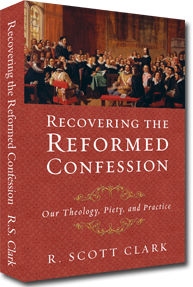







 Exclusive Psalmody